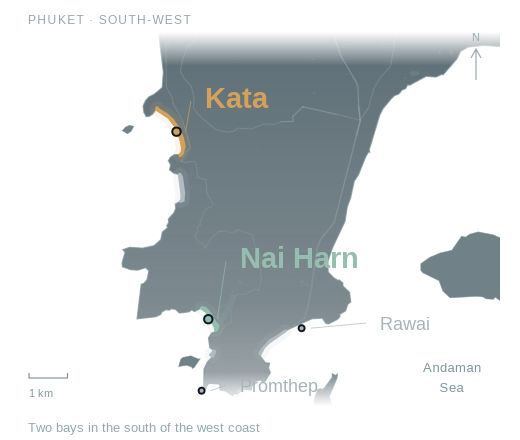
Kata and Nai Harn are two bays in the south of Phuket’s west coast. They are about 9 kilometres apart along a winding road over the hill, around 12 minutes without traffic.
Kata was one of the first places on the island to become a resort: the beach, markets, hotels and bars are all in one bay, and from May to October there are waves for surfing. In Nai Harn, behind the beach are a monastery and a lake, so almost nothing is built by the sea and housing starts further back, beyond the lake. So Kata is a resort where everything is close, while Nai Harn is a quiet beach from which people drive to Rawai for shopping.
First, we look at where both areas came from: what was here before the tourists and how each one became what it is today. Without that, it is hard to see why they are so different.
Then we look at them as they are now: how they are laid out, what an ordinary day looks like for a resident, and where the areas are heading — what is being built and how that will change them over the next few years.
At the end come the conclusions: which area suits whom, what is known about rental returns, how to buy without overpaying, and whom to contact to check a specific property.
1. Kata’s backstory
Kata is an old village. Officially it is Ban Kata, village No. 2 of Karon subdistrict. Nobody knows exactly where the name comes from; locals tell two legends. In one, the guardian spirit of the area dried rice on the plain by the hill, and “to dry” sounds like “ta” in the local dialect. In the other, the word comes from “Krata”, a “rice bay”.
Rice fields, pastures and forested hills used to cover this land. The main temple, Wat Kata, was built around 1832 according to the temple’s own history.
The first visitors stayed right in the village: local families rented them rooms, as there were no guesthouses yet. Large hotels arrived in the 1980s. The first, in November 1984, was Katathani in Kata Noi bay — 44 bungalows. Around the same time Club Med appeared on Kata Beach: it was the first project of local entrepreneur Mom Tri. He built his own house on the hill between Kata and Kata Noi, and over time the house grew into the Villa Royale hotel. And on 9 February 1989 the Boathouse hotel opened on the beach.
The 2004 tsunami flooded the 300-room Club Med and the ground floors of the beachfront hotels; Kata Noi was hit too. But buildings behind the first line were barely touched, and no hotel closed for more than a few weeks.
Today Kata is also known for surfing: the rainy season brings good waves. In 2009 Kata hosted the final of Thailand’s first international Quiksilver series, and in 2022 an international surfing festival.
As all along the west coast, new homes in Kata are climbing the hills. In August 2024, after a night of heavy rain, a landslide came down from the hill near the Big Buddha onto Soi Patak 2 in Kata village. Thirteen people died.
2. Nai Harn’s backstory
Nai Harn is a bay on the west coast of the island’s southern tip, a few kilometres south of Kata. Its fate was shaped by a monastery and a lake.
The Buddhist monastery of Wat Nai Harn stands between the beach and the lake. Behind most of the beach there are no hotels, as on other beaches, but tall casuarinas, the temple and cafés across a narrow road.
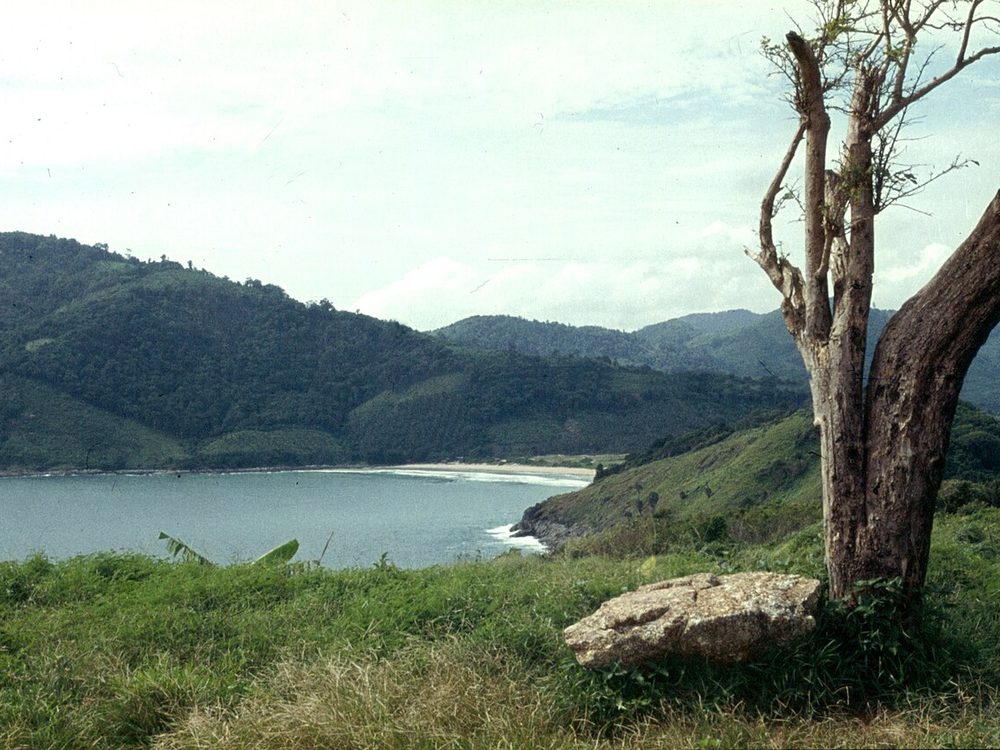
The only large hotel right by the water appeared in the 1980s on the headland at the north end of the beach. It was one of Phuket’s first luxury resorts: it operated under the Mandarin Oriental and Le Méridien brands and was long known as the Royal Phuket Yacht Club. In 2014 an investment company bought the hotel, rebuilt it over a year and a half, and in January 2016 it reopened as The Nai Harn with 130 rooms.
The bay is sheltered by headlands, so in high season sailing yachts anchor here. Today Nai Harn is loved by expats and island residents, and in December and January people come to the beach from all over the south. But there is still no busy road along the sea, and housing starts further back, beyond the lake.
3. Kata on the map: what is where
Kata is a small bay south of Karon: the beach is about 1.4 kilometres long, and beyond the headland to the south is the small bay of Kata Noi, about 0.7 kilometres. Officially Kata is part of Karon subdistrict. From here it is about 3 kilometres to central Karon, about 5 to Chalong, about 8 to Patong and about 5 to Nai Harn in a straight line.

From the sea inland, the area is laid out like this:
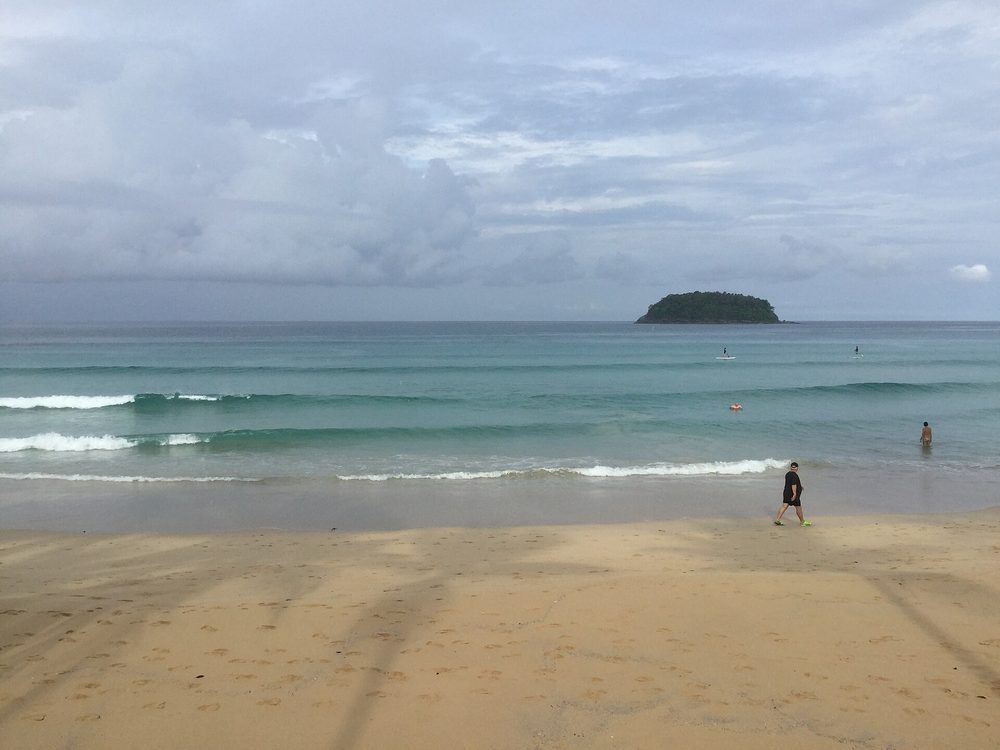
By the water — Kata Beach. Club Med takes up the middle of it, closer to the north end, with other hotels and cafés at the edges. Opposite the beach lies Koh Pu island.
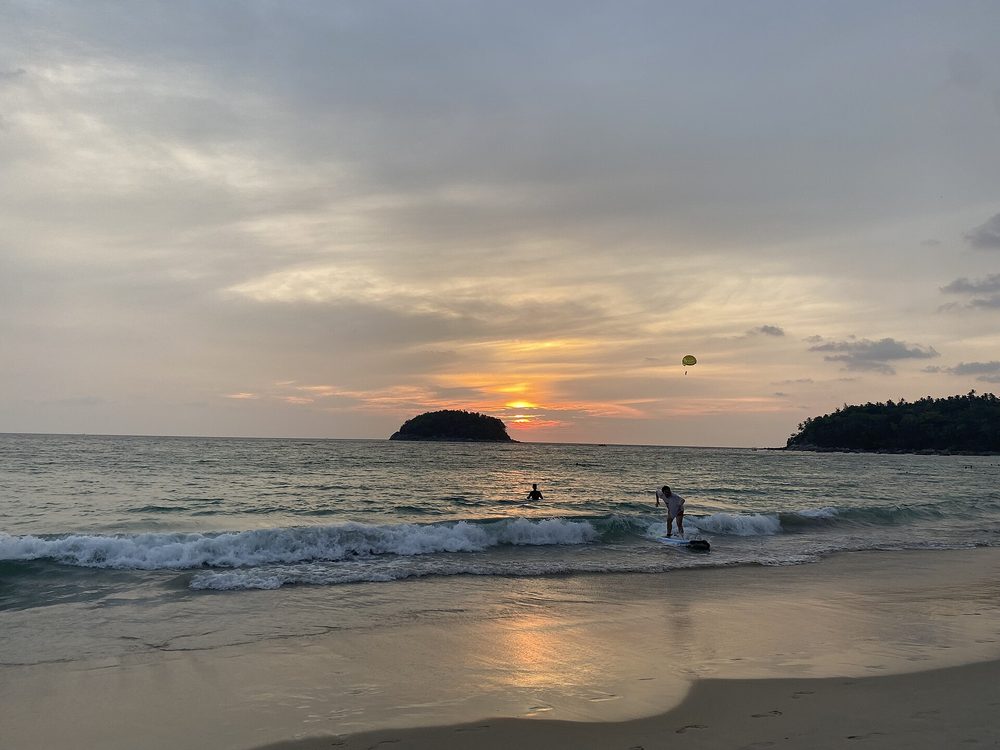
The centre — around the roundabout, about 400 metres from the sea: two markets, a night market, Kata Night Plaza, a Lotus’s supermarket, mini-marts and clinics. All within a kilometre of the beach.
A little further from the sea, about a kilometre away, are the Wat Kata temple and the Thai school Baan Kata.
The slopes — villas and apartments with sea views on the hills around the bay. Highest of all, about 2 kilometres from the beach, stands the Big Buddha.
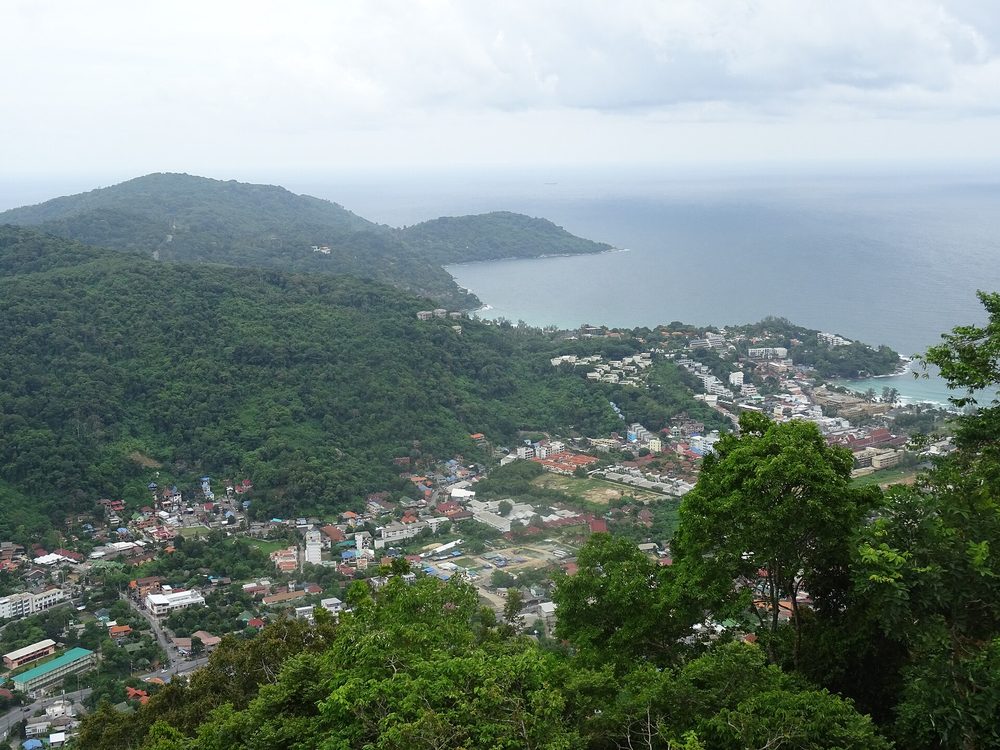
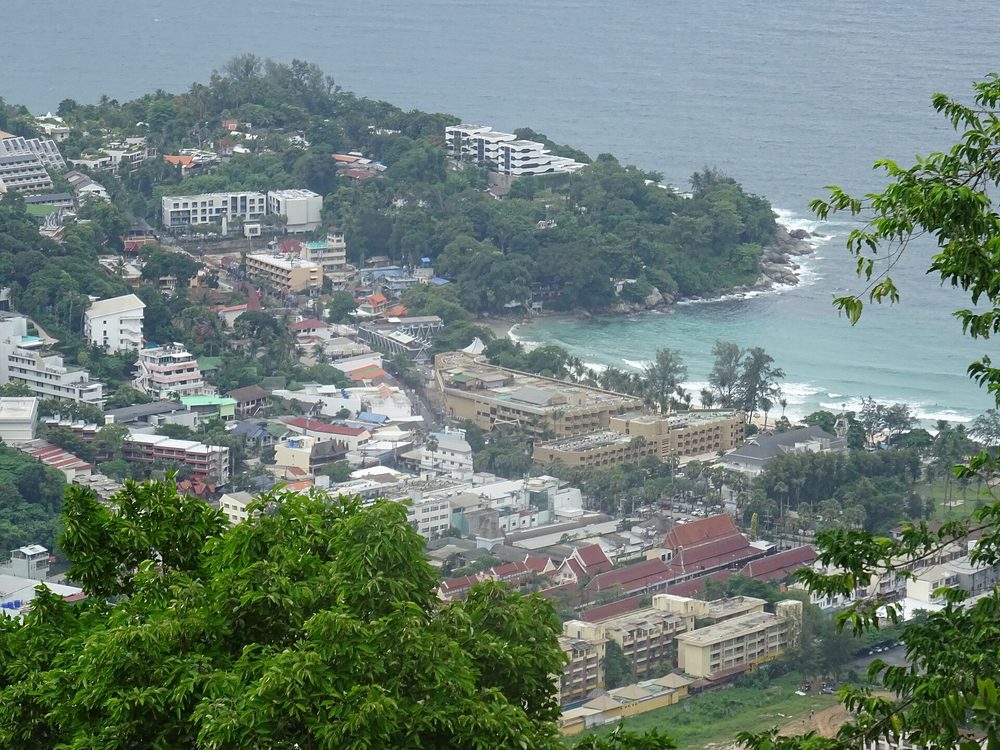
To the south — beyond the headland, the quiet Kata Noi bay with the Katathani hotel, and further along the road the Karon Viewpoint.
Kata is small, and its low-lying part is easy to walk: from the beach to the markets is about ten minutes. Walking down from the hills is easy, but climbing back up is hard — there you need a scooter or a taxi.
Glossary
What the names in listings mean
| Name | What it actually is |
|---|---|
| Kata | The beach and the village. Listings often give the address as “Karon”, because Kata is part of Karon subdistrict. |
| Kata Noi | A separate small bay beyond the headland south of Kata. |
| Kata Palm | The Phuket Smart Bus stop in Kata. |
| Big Buddha | The Buddha statue on the hill above Kata and Karon; the slopes next to it have villas. |
4. Nai Harn on the map: what is where
Nai Harn is a bay on the west coast of the island’s southern tip, between two headlands. The beach is about 0.7 kilometres long. Officially Nai Harn is part of Rawai subdistrict. Rawai pier is about 4 kilometres away by road, Kata about 9, Phuket Town about 17 and the airport about 48.

From the sea inland, the area is laid out like this:
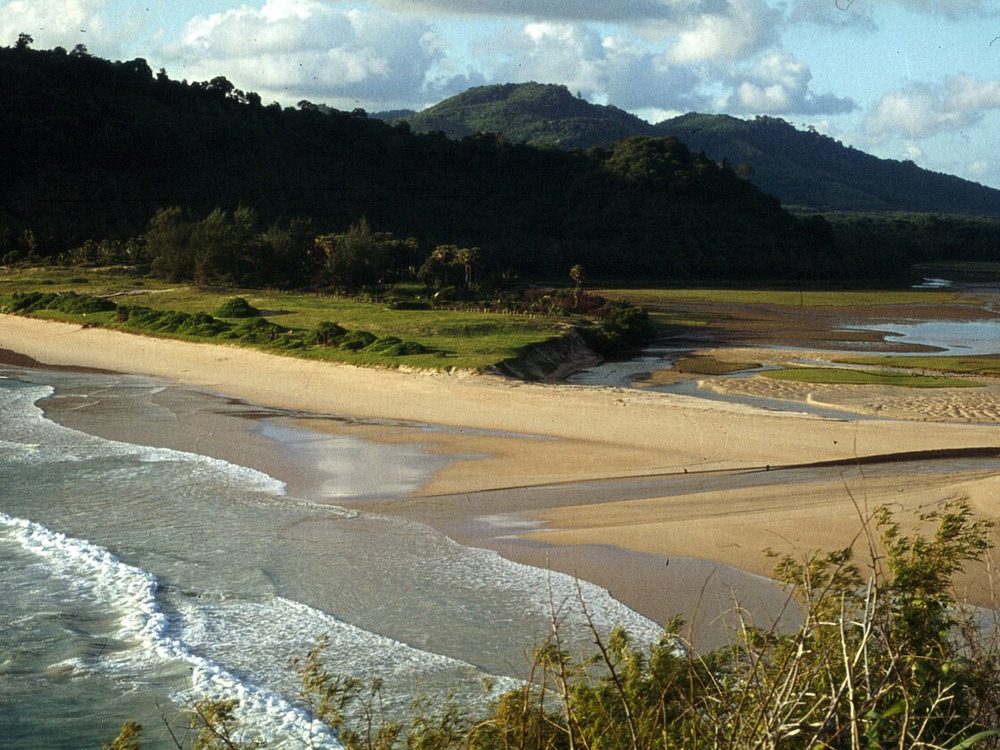
By the water is a white-sand beach shaded by casuarinas. There are no buildings right by the sea; cafés stand across a narrow road. On the headland at the north end of the beach is The Nai Harn hotel, and at the southern edge a stream flows from the lake to the sea and people wade across it.
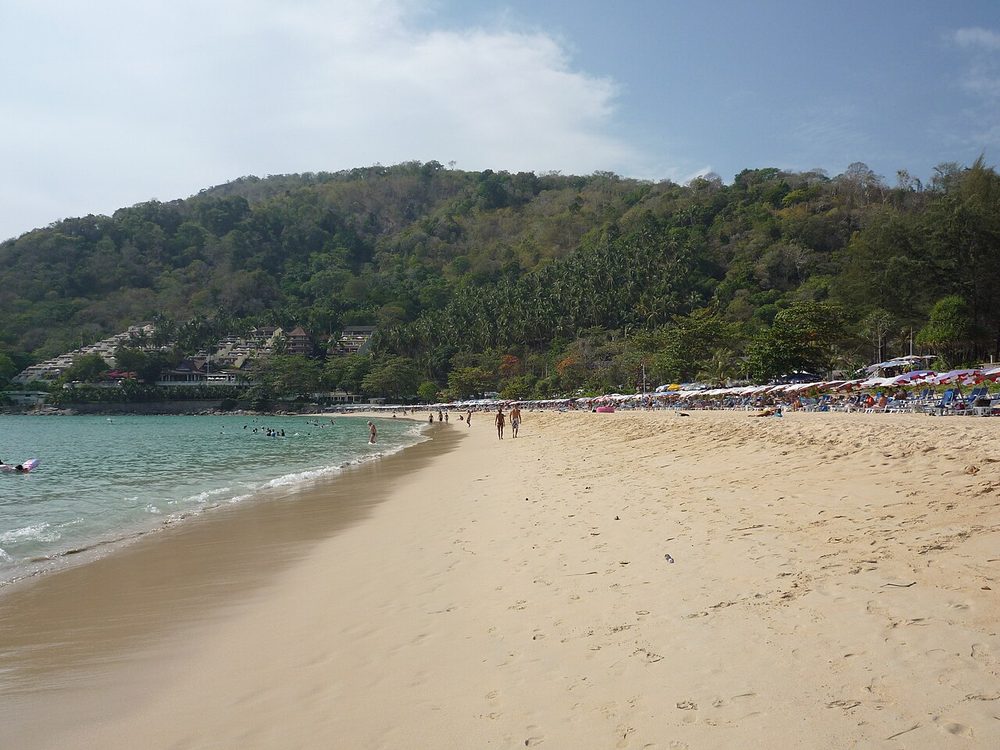
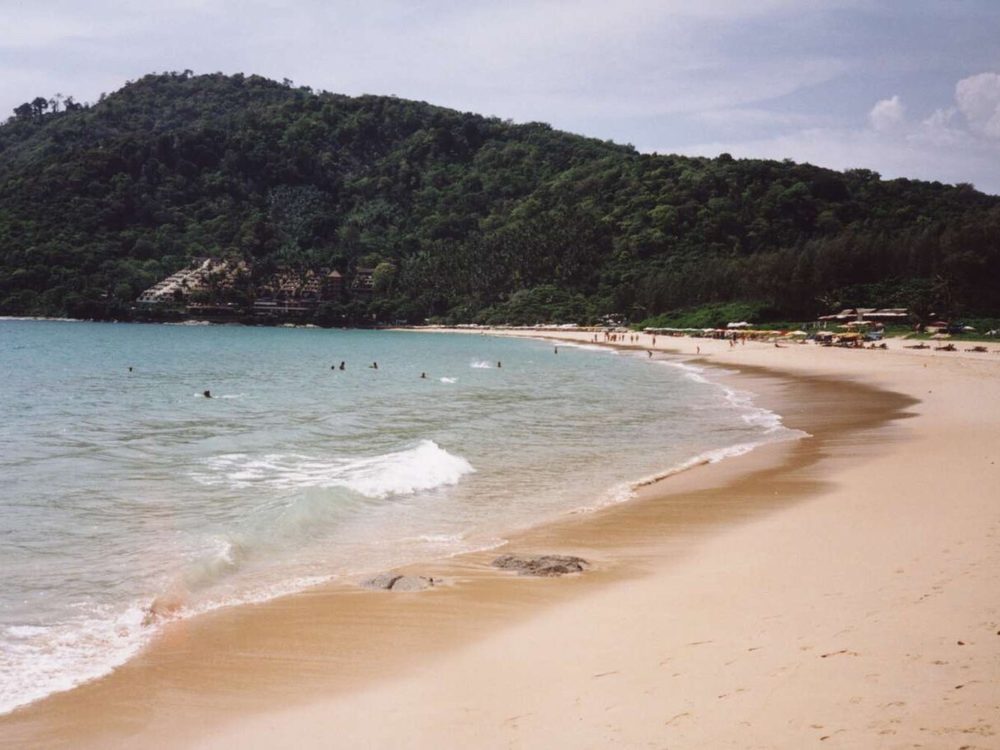
Behind the beach are Wat Nai Harn temple and the lake with its park: a path around the water for walking and running, and a playground nearby.
Further from the sea, north and east of the lake, are condominiums and villa estates within 1–1.5 kilometres of the beach. From here people walk to the sea.
To the south are the small Ya Nui beach, the Windmill Viewpoint and Promthep Cape.
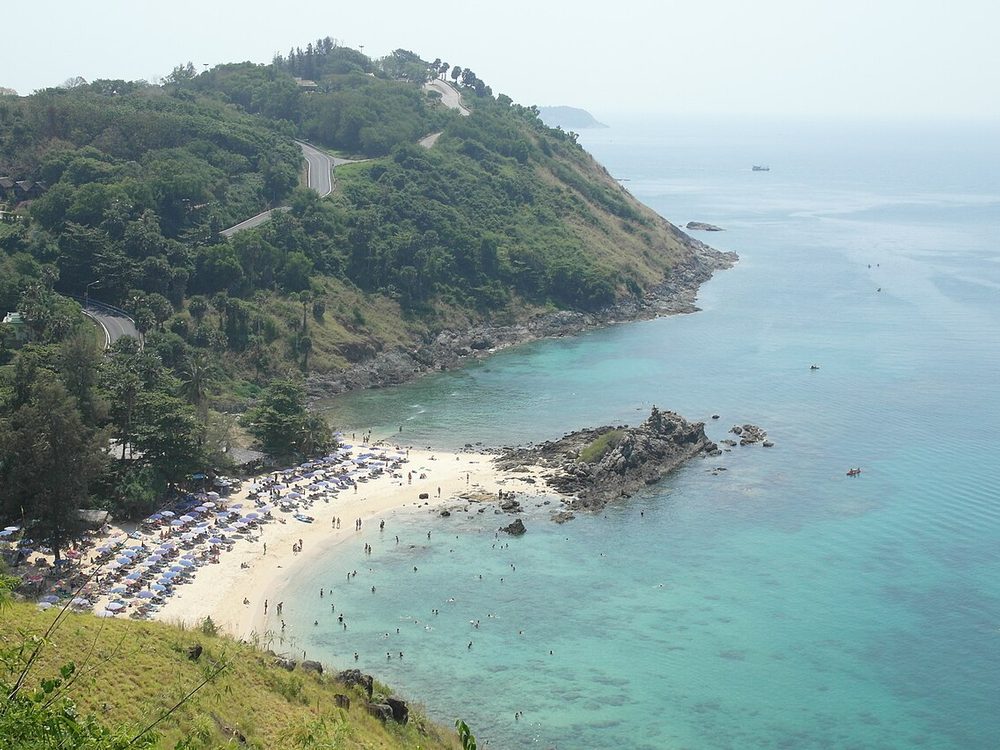
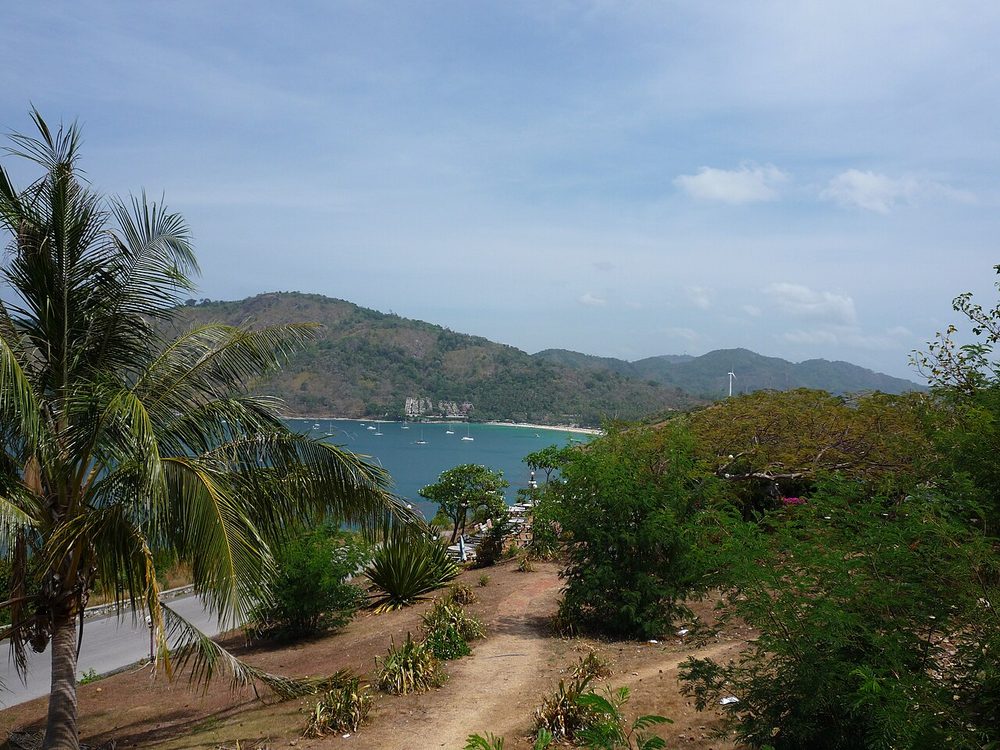
Nai Harn itself is small: from the residential developments you can walk to the beach, but for shopping, the doctor and school people drive to Sai Yuan, Rawai or Chalong.
Glossary
What the names in listings mean
| Name | What it actually is |
|---|---|
| Nai Harn, Naiharn | The beach and the residential area around the lake. Officially part of Rawai subdistrict, so addresses often say “Rawai”. |
| Nai Harn Lake, Nong Han | The lake with a park behind the beach. |
| Ya Nui | A small beach to the south, on the road to Promthep Cape. |
| Ao Sane | A small beach beyond Nai Harn’s northern headland. |
5. A day in Kata and in Nai Harn
Let’s walk through an ordinary day in both areas — from the walk to the sea in the morning to the quiet at night.
Morning: getting to the sea
Kata. From the centre to the beach is about 400 metres, a 5-minute walk. From the hills people come down by scooter or car. From May to October Kata has big waves: surfers come then, and you should only swim where the lifeguards allow it.
Nai Harn. From the developments by the lake people walk to the beach. The bay is sheltered by headlands, and in high season swimming here is easy. But from May to October strong monsoon waves reach the beach, and the municipality advises against swimming during that time.
Children: kindergarten and school
Kata. For children there is the British school BCIS in neighbouring Chalong, which takes children from 2 to 18. The school itself says Kata Beach is 15–30 minutes away. A year of schooling in 2026/27 costs from 302,000 baht in Nursery–Reception to 502,500 baht in Year 12–13.
Nai Harn. The nearest schools are Lighthouse in Rawai, about 10 minutes by car, and BCIS in Chalong. BCIS itself says it is 15–30 minutes from Nai Harn Beach. A year of tuition costs from 302,000 baht in Nursery–Reception to 502,500 baht in Year 12–13.
Errands: shops, market, doctor
Kata. Everything for daily life is around the central roundabout: two markets, a night market, Lotus’s, mini-marts and clinics, within a kilometre of the sea. The big supermarket and DIY stores are in Chalong, about 5 kilometres away. The road to the big hospitals also runs through Chalong: they are in Phuket Town, the island’s main town, about 12 kilometres away in a straight line.
Nai Harn. By the beach there are cafés, fruit stalls and a couple of minimarts, and along the road to Sai Yuan restaurants and small Tops Daily stores. For a supermarket, the doctor or a pharmacy people drive to Sai Yuan and Rawai, 3–4 kilometres away.
Getting around the island
Kata. The Phuket Smart Bus from the airport runs along the west coast and stops in Kata at Kata Palm; a ticket costs 100 baht. The centre of Karon is about three kilometres away, Chalong about five.
Nai Harn. The bus does not come to the beach itself: the nearest stop is on Sai Yuan, about 3 kilometres away. The airport is about an hour away, Kata about 12 minutes along a winding road over the hill.
Evening
Kata. In the evening — the night market and Kata Night Plaza near the centre, restaurants by the beach and sunset over the sea with Koh Pu island.
Nai Harn. You can watch the sunset over the bay right from the beach, and people have dinner at The Nai Harn’s restaurants and along the road. There is almost no nightlife: for that people go to Kata, about 12 minutes away, or Patong, about 23 minutes without traffic.
Night and quiet
Kata. It is quietest on the hills and away from the centre, noisier near the night market and the beach bars. There is construction on the slopes.
Nai Harn. Nights are quiet: there is no busy road or bars along the beach. The noise comes from building sites on the hillsides and motorbikes on the road to Sai Yuan.
And in the rainy season
Kata. From May to October the beach has big waves and red flags, but this is the surfing season. In heavy downpours the low-lying areas flood. And the main risk is the slopes: the 2024 landslide came down in Kata itself.
Nai Harn. From May to October strong waves reach the beach and red flags go up. At that time people swim only where lifeguards allow.
In short
A typical day compared
| Kata | Nai Harn | |
|---|---|---|
| To the sea | About 400 m on foot from the centre; from the hills — by transport | Walk from the developments by the lake |
| Children | BCIS in Chalong — 15–30 minutes | Lighthouse in Rawai; BCIS 15–30 minutes away |
| Shops and doctor | Markets, Lotus’s and clinics in the centre; big stores in Chalong | Cafés and minimarts; for everything else, Sai Yuan, 3–4 km away |
| Transport | Bus stop at Kata Palm; Chalong about 5 km away | No bus; about 3 km to the stop, about an hour to the airport |
| Evening | Night market, Kata Night Plaza, beach restaurants | Sunset on the beach, hotel restaurants; no nightlife |
| Noise | Near the centre and bars; construction on the slopes | Quiet; building sites on the hillsides |
| Rainy season | Waves and surfing season, flooding in low-lying areas, landslides on the slopes | Strong waves, swimming not advised |
6. Where the areas are heading
Neither area has free land by the sea, but they grow differently. Kata climbs the slopes around the bay, Nai Harn spreads beyond the lake and onto the hills.
Kata is growing on the hills
Kata’s biggest new project is SO Origin Kata: according to the developer’s brochure, 686 apartments in four eight-storey buildings, with completion planned for 2027. Phenomenon Residence is being built nearby — 293 apartments, according to the developer. On the beach, Club Med has been renewed: it reopened in 2022 after a major renovation.
Nai Harn is growing beyond the lake
North and east of the lake and on the slopes stand the Nai Harn Beach Condominium, Utopia Naiharn and The Lago developments, as well as the Baan Bua and Intira Villas estates. Projects here are small, and villas make up a noticeable share of what is on offer.
Building on hillsides has become easier: Phuket used to ban construction more than 80 metres above sea level, and since 14 December 2024 building up to 140 metres has been allowed in designated zones — with limits on the plot and the size of the building. How many new hillside projects appear depends on the zone and the plot. But a hillside apartment always needs stricter checks than usual: drainage, retaining walls, permits — both your own and those of neighbouring sites further up the hill.
7. What is for sale here
In both areas, essentially two things are sold: apartments and villas. The difference between them is not just size, but what exactly you end up owning.
Apartment
Apartments are sold in residential complexes — in Thailand such a building is called a condominium. A complex usually has a shared pool, gym and security, and a management company keeps things in order.
A foreigner can register an apartment in their own name outright and permanently — this is called freehold. There are usually two main conditions. First, foreigners may own no more than 49% of the total floor area of all units in a building, so before buying you check whether the foreign quota is still available. Second, the money for the purchase comes from abroad, and the bank issues a certificate confirming this. There are other legal routes — for example, Thai permanent residence — but most buyers go this way.
Villa
A villa is a detached house with its own plot, usually with a private pool. This is more complicated: as a rule, a foreigner cannot buy land in Thailand in their own name. So the land is most often taken on a long-term lease, usually 30 years — this is called leasehold — and the house itself is registered separately. The law does not guarantee renewal of the lease after 30 years; it is written into the contract.
In short: a foreigner usually buys an apartment freehold, sometimes on a long lease. A common arrangement for a villa is a long-term land lease, with rights to the house registered separately. The terms depend on the property. That is neither better nor worse, but a villa’s documents need closer checking.
What is sold where
In Kata, apartments are sold in developments near the centre and on the hills — for example Kata Ocean View, SO Origin Kata and The Beach Condotel — while villas stand on the slopes around the bay and at Kata Noi. Some apartments and villas are sold as leasehold, that is, a long-term lease rather than ownership — check this before buying. In Nai Harn, apartments are in developments by the lake, and villas are in estates on the slopes. For some villas the land is registered to a Thai owner — a lawyer checks this option separately.
Prices
Below are real listings from late October to mid-November 2026. These are asking prices, not sale prices, and the sample is small, so look at the order of magnitude rather than exact figures.
Prices
Sample listings for sale
| Kata | Nai Harn | |
|---|---|---|
| One-bedroom apartment | 2.7–6.55 million baht for 26–53 m²: from 75,000 to 170,000 baht per m² | 3–4.45 million baht for 44–56 m²: 54,000 to 101,000 baht per m² |
| Larger apartment | 2 bedrooms, 65–154 m² — 5.5–19.8 million baht (73,000–162,000 baht per m²) | 2 bedrooms, 57–124 m² — 8.6–14.5 million baht (77,000–150,000 baht per m²) |
| Villa | 3 bedrooms, 225 m², Mali Thai Pool Villas — 19.9–28.9 million baht in listings as of 19.11.2026; check the form of land ownership for each villa | 3 bedrooms, 170–200 m² — 12.5–18.3 million baht; 4 bedrooms, 500–620 m² — 28.9–36.9 million baht |
Price depends heavily on how new the building is, the view and how far it is to the sea. So compare properties of the same type and with the same form of ownership.
8. Money: costs, renting, living and resale
Buy to rent, live here yourself or do both. First, let’s look at what you will pay either way.
What you will pay
An apartment comes with a compulsory monthly fee for the upkeep of the development: the pool, cleaning and security. In Kata, at Kata Ocean View and VIP Kata, listings give a fee of about 60 baht per m² a month — 2,400–3,000 baht for a 40–50 m² apartment. In Nai Harn, the listings cited give about 50 baht per m²: for example, 2,200 baht a month for a 44 m² apartment at Utopia Naiharn. In a new building there is also a one-off payment into the building’s sinking fund when you receive the keys. A villa in an estate can also have shared fees: in one Baan Bua listing in Nai Harn the buyer pays a one-off 150,000 baht into the sinking fund, while the same listing gives the monthly fee in two different amounts — check it with the seller. On top of that you maintain the pool and garden and pay for repairs.
Long-term rental
A one-year contract: the tenant pays monthly and covers electricity and water. Rental income is lower, but managing the property is simpler and more predictable: you do not have to find new guests every few days.
For example, listings for autumn 2026. In Kata: a 30 m² one-bedroom apartment — 18,000 baht a month, a one-bedroom apartment at Kata Top View — 30,000 baht, a three-bedroom villa — about 98,000 baht, with cleaning, garden and pool already included. In Nai Harn: a 44 m² one-bedroom apartment at Utopia Naiharn — 30,000 baht, 56 m² at Nai Harn Beach Condominium — 35,000, a 115 m² two-bedroom apartment — 76,000 baht. The rate depends heavily on the development and the season, so it is better to check the real price against 5–10 similar listings in the place you choose.
Short-term rental
Guests come for a few days, as to a hotel. They pay more per night, but the property often stands empty, especially in the rainy season. AirROI, a service that collects Airbnb data, does not count these areas separately: it groups Kata with Karon and Nai Harn with Rawai. Over the past year, property in both was occupied for about 41% of nights. There are about 2,500 listings in Rawai subdistrict together with Nai Harn, and about 1,200 in Kata and Karon together.
Something else matters too: under Thai law, renting an apartment out by the night counts as running a hotel, and it is not allowed everywhere without a licence. On top of that, every complex has its own rules — some ban short-term rentals. This is checked before buying.
If you rent through a management company rather than yourself, it takes a share of the income, and rates and services vary widely between companies. The booking platform takes its own commission too: under the single-fee model, most hosts pay Airbnb 15.5%. So the owner receives noticeably less of the nightly rate than the listings suggest — before buying, ask the management company for a net-income calculation.
Live here yourself
In Kata the beach, markets and centre are within a kilometre, and much can be done on foot. In Nai Harn the beach and the lake are within walking distance, but for shopping and the doctor people drive to Sai Yuan, 3–4 kilometres away. BCIS in Chalong is 15–30 minutes from both areas, and from Nai Harn Lighthouse in Rawai is also close.
Beyond the complex fee, the main cost is electricity, mostly air-conditioning. And while you are away, someone has to look after the apartment: in the rainy season it needs airing and checking for leaks. A management company usually takes care of this.
Live here part of the year and rent it out
What matters is which months you come. Homes rent best from November to April; in the rainy season, from May to October, there are fewer guests. If you live here in winter, you will be renting out in the weak months, and income will be well below the annual figure. If you come in summer and rent out in winter, it works out better.
While you are away, you can let the apartment for a few months at a time or by the night. For nightly rentals, check the licence and the complex’s rules in advance; check-ins are usually handed to a management company.
Resale
In Kata you will be selling alongside new projects on the slopes, including the large SO Origin. In Nai Harn the market is smaller, and there are few apartments near the swimming beach.
9. Choosing by goal
Choice
Choosing by goal
| Goal | Better fit | Why |
|---|---|---|
| Living with school-age children | No clear winner | BCIS in Chalong is 15–30 minutes from both areas. From Nai Harn, Lighthouse school in Rawai is about 10 minutes away without traffic, from Kata about 13. |
| Living as a couple or alone, without children | Depends on your lifestyle | Kata — if you want the beach, markets and bars close by. Nai Harn — if quiet, the beach and the lake matter more, and calm evenings. |
| Living without a car | Kata, more likely | The beach, markets, a supermarket and clinics are within a kilometre. In Nai Harn the beach, the lake and small cafés are within walking distance, but for most shopping and services you have to drive to Sai Yuan. |
| Living with a car or scooter | Both areas | With transport, distances in Nai Harn stop being a problem, and in Kata the apartments on the slopes open up. |
| Quiet | Leans towards Nai Harn | There is no busy road or bars along the beach. Kata is noisier near the night market and bars, with construction on the slopes. |
| Surfing | Kata | From May to October there are waves here, and Kata hosts competitions. |
| Nightlife | Kata | A night market, bars and restaurants near the centre. From Nai Harn people drive to Kata for this. |
| Long-term rental | No clear winner | In the listings cited, a one-bedroom apartment costs 18,000–30,000 baht a month in Kata and 30,000–35,000 in Nai Harn. |
| Short-term rental | No clear winner | Occupancy is about 41% of nights in both cases, but AirROI counts Kata together with Karon and Nai Harn together with Rawai. First check the licence and the development’s rules. |
| Sea-view apartment | Kata, more likely | New complexes on the slopes around the bay. Check drainage, retaining walls and permits. |
| Villa | Both areas | In Kata villas stand on the slopes around the bay and at Kata Noi, in Nai Harn by the lake and on the slopes. Compare the view, the plot and the form of ownership; the prices in our selection are not comparable. |
| Smallest budget | No clear winner | In our selection, one-bedroom apartments start from 2.7 million baht in Kata and from 3 million baht in Nai Harn. |
10. How a purchase works and what to check
Buying in Thailand is simpler than it seems, but several parties are involved: the agent, the lawyer, the bank and the land office. Here is how it usually goes, step by step.
1. Search: developer or agent
A new apartment is bought from the developer — directly or through an agent. In that case the developer usually pays the agent’s commission, but it is still worth comparing the price and promotions with the developer’s direct offer before reserving. A resale home from a private owner is almost always sold through an agency. Here too the seller usually pays the commission, most often 3–5% of the price, but terms vary, so ask about it straight away.
2. Viewing
Many people first view properties by video, but it is better to see the chosen home yourself or send someone you trust: the walk to the sea, noise and nearby construction do not show up on video. What exactly to check on site is in the list below.
3. Your own lawyer
This is the key step, and it starts before any money changes hands. You hire the lawyer yourself; they must not work for the seller or the agent. First they read the reservation terms: who receives the money and when it is refunded. Then, at the land office, they check the title deed, debts and encumbrances, the building permit and whether the building still has foreign quota available, and they read the contract. For a villa, they also check the land lease: its term, the renewal conditions and what happens to the house.
4. Reservation
Once the lawyer has seen the terms, you pay a small reservation deposit — the seller takes the property off the market while the full check is done. The amount and the refund terms are set out in the reservation agreement.
5. Contract and payment
Next, the sale and purchase agreement is signed. A new build is usually paid for in instalments as construction progresses; for a finished home, the buyer pays a deposit at signing and the balance at registration. The money is transferred from abroad to a Thai account, stating property purchase as the purpose of payment. The bank issues a transfer certificate — if the apartment is registered on this basis, it cannot be done without it.
6. Registration
The provincial land office registers either the ownership or the long-term lease. You do not have to attend in person: a lawyer can do it under a power of attorney. Fees are paid here too: 2% of the appraised value for the transfer (the contract decides who pays, often split in half). Most often the seller also pays income tax and 0.5% stamp duty, or, if selling within five years of buying, a 3.3% specific business tax instead of stamp duty. If you are leasing land for a villa, the lease agreement is registered, with a fee of about 1% of the total rent for the whole term. There are exceptions, so it is best to work out the amount for your deal with a lawyer in advance.
7. Keys
After registration, the handover certificate is signed, you receive the keys and start paying the complex’s maintenance fees. If you plan to rent the property out, this is also when you choose a management company.
In short: the agent searches, the lawyer checks, the bank confirms the transfer, and the land office registers. Buying a finished home usually takes a few weeks; with a new build, you wait until construction is complete.
Checklist
Before paying a deposit
- The exact address; walk the route to the beach rather than just checking it on a map.
- The plot in the rain: drainage, elevation, gradient and retaining walls — especially on the slopes in both districts.
- For a hillside: is there construction or a steep cut further up the hill?
- Noise at different times of day: the night market and bars near central Kata, construction on the slopes and mopeds on the road to Sai Yuan in Nai Harn.
- Whether short-term rental is allowed in this particular building.
- Title to the land and the building, the foreign quota, payment history; for leasehold — how many years of the lease remain.
How to choose
Three steps
- 01
Define your goal
Living there yourself, renting out, or both: this decides which area wins.
- 02
Check the address
Not the area name, but the point on the map: the route to the beach, the terrain, nearby construction.
- 03
Ask for the numbers
A year of rental and cost reports for the specific property, not area averages.
11. Risks and how we can help
You can choose an area yourself: everything discussed above can be checked on a map, in listings and in conversation with the seller. It gets harder with a specific property and its documents. These are the problems buyers in Phuket run into most often:
- Land “held through a Thai company”. So that a foreigner can own the land under a villa, sellers sometimes offer to register it to a Thai company whose Thai co-owners exist only on paper. The law prohibits this, and such property can be lost.
- Land with an incomplete title. Land documents in Thailand come in different kinds, and not all of them give full ownership. On the hills there are plots where building should never have been allowed at all.
- The foreign quota is full. If a building’s foreign quota is already used up, the apartment cannot be registered to you as freehold — you may be offered a lease instead, without always being told so plainly.
- A deposit paid to the wrong person. Money is transferred only under a signed contract and only to an account whose owner your lawyer has verified.
- Promised returns. A “guaranteed income” from a developer is a promise by one particular company, not by the market. If the company runs into trouble, the payments stop.
- Construction delays. A new build is paid for in instalments, and if the developer misses deadlines, your money is tied up. That is why people look at how the developer delivered its previous projects.
- Short-term rental without a licence. Renting an apartment by the night where it is not allowed can bring fines, and the complex may ban the rentals.
Almost all of this is solved by one thing: checking before you pay. That is why the key step in buying is having your own lawyer.
At the same time, Phuket is one of the liveliest resort property markets in Asia: people come here on holiday and move here to live, and developers are bringing thousands of new apartments to market. There are many opportunities here, but also many nuances that are easy to get lost in from the outside.
Need help choosing an area in Phuket?
Leave your email and get a free consultation.
12. Frequently asked questions
How is Kata different from Nai Harn?
Both are bays with swimming beaches in the south of the west coast, about 9 kilometres apart by road. Kata is a small resort: markets, bars, hotels and surfing in the rainy season. In Nai Harn almost nothing is built by the sea: behind the beach are a temple and a lake, housing is further back, and people drive to Sai Yuan for shopping.
Which area is better for renting out?
Open data shows no winner: occupancy is about 41% of nights in both cases, but AirROI counts Kata together with Karon and Nai Harn together with Rawai. What decides it is the specific property and its records.
Can you live here with school-age children?
Yes. BCIS, the British school in Chalong, is 15–30 minutes from both areas. Another option is Lighthouse international school in Rawai: about 10 minutes by car without traffic from Nai Harn and about 13 from Kata.
Why is an apartment in Kata listed as “Karon”?
Kata is part of Karon subdistrict, so the address often says “Karon”. The word Beach in a project’s name does not mean the sea is close either. Check the point on the map.
Why is a Nai Harn apartment listed as “Rawai”?
Nai Harn is part of Rawai subdistrict, so addresses often say “Rawai”. And the other way round, “Rawai” can also turn out to be by the pier, several kilometres from Nai Harn Beach. Check the point on the map.
Is it safe to buy on a slope?
Yes, but you need more checks than usual: drainage, retaining walls, permits — its own and those of neighbouring construction further up the hill. In August 2024 a landslide in Kata village killed 13 people.
Can a foreigner buy a villa?
The house itself — yes; the land under it — no. The land is usually leased for 30 years and the house is registered separately. Lease renewal is written into the contract; the law does not guarantee it.
What are freehold and leasehold?
Freehold is full ownership in perpetuity — this is how apartments are registered. Leasehold is a long-term lease, usually for 30 years — this is how the land under a villa is most often held.
Can you buy an apartment without coming to Thailand?
Yes. A lawyer can carry out the registration at the land office under a power of attorney. But it is better to see the property in person or through someone you trust.
Who pays the agent’s commission?
Usually the seller: for new builds the developer, on the resale market the owner, most often 3–5% of the price. Confirm the terms before reserving.
How much does a one-bedroom apartment cost?
Based on listings from late October to mid-November 2026 — from 2.7 to 6.55 million baht in Kata and from 3 to 4.45 million baht in Nai Harn. These are sellers’ asking prices, not sale prices.
Can you rent an apartment out by the night?
Not everywhere. Under Thai law, renting by the night counts as running a hotel, and many complexes prohibit it in their own rules. Check before buying.
When is the rainy season in Phuket?
Roughly from May to October. At this time there is more rain and more waves, red flags go up on the beaches, roads in low-lying areas flood, and landslides happen on the hillsides.
Sources
- NRCT — study of the “Rak Kata Karon” club: Kata as a village of Karon subdistrict, the legend of the name.
- “Place names of Phuket” (in Thai) — legends of the name Kata, the former landscape.
- Phuket City Info — history of Wat Kata (Wat Kittisangkharam).
- Katathani Collection — opening in November 1984.
- Mom Tri’s Villa Royale — Mom Tri, Club Med on Kata Beach.
- Boathouse — opening on 9 February 1989.
- Club Med — the renewed resort in Kata, 2022.
- Thailand Surfing Federation — competitions in Kata, 2009 and 2022.
- Department of Mineral Resources of Thailand — landslide in Kata village, 23.08.2024.
- EEFIT — report on the 2004 tsunami: Kata, Kata Noi, Karon.
- Origin — SO Origin Kata Phuket brochure: 686 units, 4 buildings, completion in 2027.
- Lazudi — SO Origin Kata Phuket.
- Phuket9 — Phenomenon Residence: 293 units according to the developer.
- PropertyHub — Kata Ocean View, SO Origin Kata, The Beach Condotel, The View; checked 11.11.2026.
- FazWaz — Kata Ocean View, 40 m² apartment, maintenance fee; VIP Kata Condominium 1, 50 m² apartment, maintenance fee; checked 19.11.2026.
- FazWaz — Mali Thai Pool Villas in Kata, three-bedroom villas; checked 19.11.2026.
- Mali Thai Villa — villa prices and status from the developer; checked 19.11.2026.
- Thailand-Property — rentals in Kata: The Beach Condotel, Kata Top View, Baan Saint Tropez; checked 27.10.2026.
- Phuket Expat Guide — agent commissions in Phuket.
- AirROI — Karon (including Kata).
- TAT — Karon and Rawai as subdistricts of Mueang district.
- Alden, “Paradise Lost and Found”, 2009 — the first tourists in Kata and Karon.
- Kata Group — Kata Inn 85, 1985; Phuketindex — opening of Phuket Arcadia in 1987 and the move to Hilton; Hospitality Net — rebranding to Pullman, 2023.
- Bangkok Post — landslide in Kata (Karon subdistrict), 13 dead; The Phuket News — Big Buddha construction among the causes.
- Thailand Construction — new hillside building rules from 14.12.2024.
- The Phuket News — lifeguards in Karon.
- Nation Thailand — flooding on Patak Road; The Thaiger — flooding at the Nong Harn roundabout.
- BCIS Phuket — tuition fees 2026/27; location.
- Phuket Smart Bus — timetable and fare; TAT — stops.
- Jamie’s Phuket Blog — Nai Harn temple and the land behind the beach.
- Phuket 101 — Nai Harn Beach: casuarinas, the lake, Ya Nui, Promthep Cape.
- C9 Hotelworks — Royal Phuket Yacht Club to become The Nai Harn, 2015.
- TravelNewsAsia — The Nai Harn: sold in 2014, opening on 16 January 2016, 130 rooms.
- Rawai municipality — Nai Harn Beach, waves from May to October.
- Rawai municipality — Nai Harn Lake park.
- Lighthouse International School — 2026/27 tuition and fees; checked 18.11.2026.
- Phuket 101 — international schools: Lighthouse in Rawai.
- OSRM — route from Nai Harn Beach to Kata without traffic.
- OSRM — route from Nai Harn Beach to Patong without traffic.
- Thailand-Property — apartments for sale in Rawai and Nai Harn; checked 18.11.2026.
- Thailand-Property — villas for sale; checked 18.11.2026.
- Thailand-Property — apartments for rent; checked 18.11.2026.
- FazWaz — Utopia Naiharn, price and maintenance fee; checked 27.10.2026.
- FazWaz — The Sands, Nai Harn; checked 27.10.2026.
- FazWaz — villa in Nai Harn Baan Bua: land registered to a Thai owner, fees; checked 27.10.2026.
- AirROI — Rawai (including Nai Harn): occupancy, listings.
- Siam Legal — Condominium Act: the 49% foreign quota.
- Siam Legal — transfer fees and taxes.
- Ministerial Regulation on hotel business No. 2, B.E. 2566.
- OSRM — route from Nai Harn Beach to Lighthouse school without traffic; Kata to Lighthouse school.
- Map geodata and distances © OpenStreetMap contributors.
Data checked: 27.10–19.11.2026. Prices are listings, not sales.