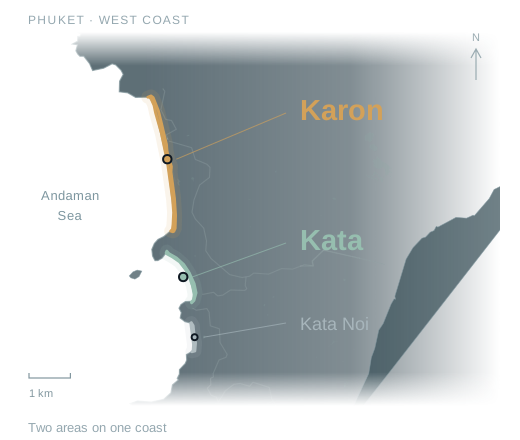
Kata and Karon are neighbours on Phuket’s west coast: only a low headland separates them, and officially they are one subdistrict.
Both grew out of villages and were among the first places on the island to become resorts. But they are built differently. Kata is a compact bay: the beach, markets and centre lie within a kilometre, and quiet Kata Noi sits beyond the headland. Karon stretches along one of the longest beaches on the island, with its centre at the northern end. So Kata means everything close by and surfing in the rainy season, while Karon means the space of a long beach and a slightly bigger resort.
First, we look at where both areas came from: what was here before the tourists and how each one became what it is today. Without that, it is hard to see why they are so different.
Then we look at them as they are now: how they are laid out, what an ordinary day looks like for a resident, and where the areas are heading — what is being built and how that will change them over the next few years.
At the end come the conclusions: which area suits whom, what is known about rental returns, how to buy without overpaying, and whom to contact to check a specific property.
1. Kata’s backstory
Kata is an old village. Officially it is Ban Kata, village No. 2 of Karon subdistrict. Nobody knows exactly where the name comes from; locals tell two legends. In one, the guardian spirit of the area dried rice on the plain by the hill, and “to dry” sounds like “ta” in the local dialect. In the other, the word comes from “Krata”, a “rice bay”.
Rice fields, pastures and forested hills used to cover this land. The main temple, Wat Kata, was built around 1832 according to the temple’s own history — almost 80 years before the temple in Karon.
The first visitors stayed right in the village: local families rented them rooms, as there were no guesthouses yet. Large hotels arrived in the 1980s. The first, in November 1984, was Katathani in Kata Noi bay — 44 bungalows. Around the same time Club Med appeared on Kata Beach: it was the first project of local entrepreneur Mom Tri. He built his own house on the hill between Kata and Kata Noi, and over time the house grew into the Villa Royale hotel. And on 9 February 1989 the Boathouse hotel opened on the beach.
The 2004 tsunami flooded the 300-room Club Med and the ground floors of the beachfront hotels; Kata Noi was hit too. But buildings behind the first line were barely touched, and no hotel closed for more than a few weeks.
Today Kata is also known for surfing: the rainy season brings good waves. In 2009 Kata hosted the final of Thailand’s first international Quiksilver series, and in 2022 an international surfing festival.
New houses here are climbing the hills too. In August 2024, after a night of heavy rain, a landslide came down from the hill near the Big Buddha onto Soi Patak 2 in Kata village. Thirteen people died.
2. Karon’s backstory
Karon is an old place. The second part of its name means “house” in the old local dialect.
People have lived here for more than a hundred years. There used to be two villages, Karon and Kata. Around 1952 they were split into four. The main temple, Wat Karon, was built in 1909. Today a market is held at the temple twice a week.
People lived mostly by fishing. One visitor who came to Phuket in the 1960s recalled that the main fishing village on this coast was in Karon, built around a lagoon. You can still see what is left of the lagoon as you drive down into Karon from the hill to the north. Tin was mined on the border with Patong; hotels now stand where the mine was. In 2006 a statue of a fisherman was put up near the Karon Circle roundabout as a reminder of the past.
Tourists came here earlier than to Patong. First came backpackers, and the locals looked after them themselves. Then hotels began to be built. In 1985 an 80-room hotel opened by the beach, and in 1987 Phuket Arcadia, which later became a Hilton and is now a Pullman. In the late 1980s Le Méridien appeared in the small bay of Karon Noi.
The 2004 tsunami only hit the front line. At two hotels by the sea, around 70 bungalows were flooded. But a month later they were open again, the Hilton was barely touched and became a base for rescuers, and by autumn 2005 every hotel in Karon was working.
Today Karon is one of Phuket’s main beach resorts. It is quieter than Patong, so families and couples come here. The beach is one of the longest on the island.
Almost no free land is left by the sea, so new homes are built on the hills. And since December 2024 building on the hills has been allowed higher up than before.
3. Kata on the map: what is where
Kata is a small bay south of Karon: the beach is about 1.4 kilometres long, and beyond the headland to the south is the little Kata Noi bay, about 0.7 kilometres. Officially Kata is part of Karon subdistrict. From here it is about 3 kilometres to the centre of Karon, about 5 to Chalong and about 8 to Patong in a straight line.

From the sea inland, the area is laid out like this:
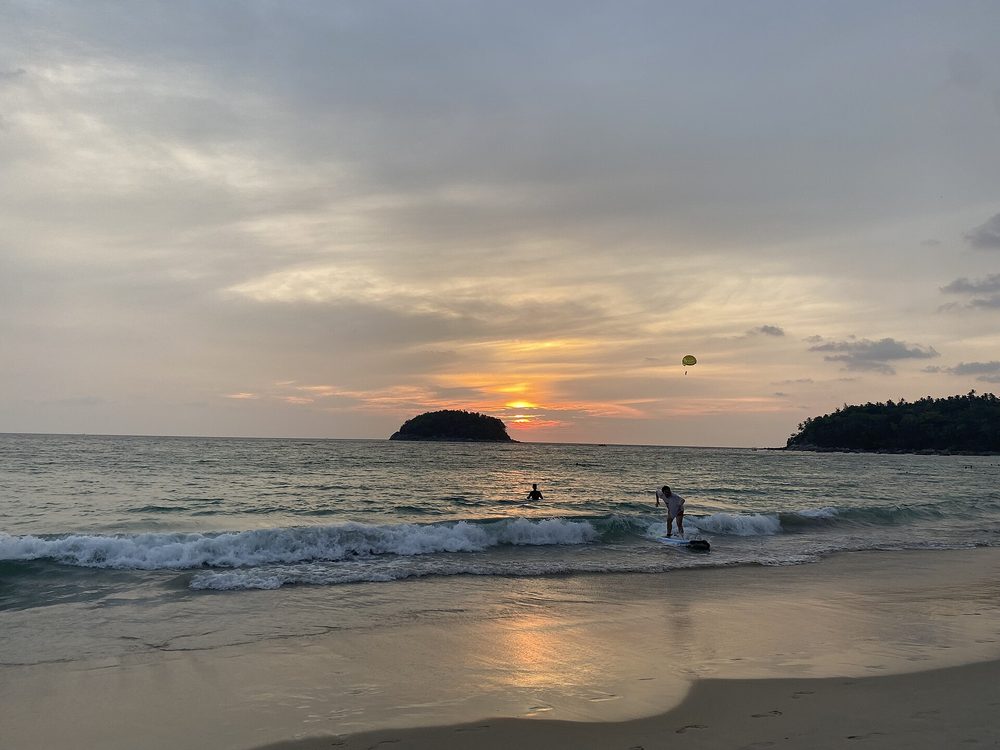
By the water — Kata Beach. Club Med takes up the middle of it, closer to the north end, with other hotels and cafés at the edges. Opposite the beach lies Koh Pu island.
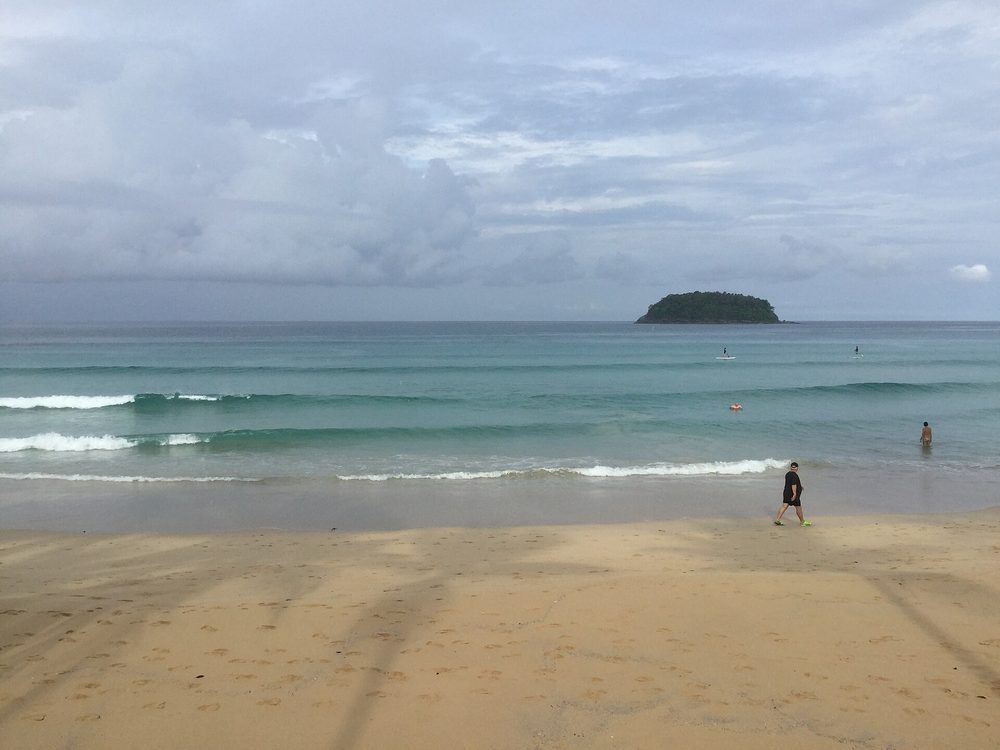
The centre — around the roundabout, about 400 metres from the sea: two markets, a night market, Kata Night Plaza, a Lotus’s supermarket, mini-marts and clinics. All within a kilometre of the beach.
A little further from the sea, about a kilometre away, are the Wat Kata temple and the Thai school Baan Kata.
The slopes — villas and apartments with sea views on the hills around the bay. Highest of all, about 2 kilometres from the beach, stands the Big Buddha.
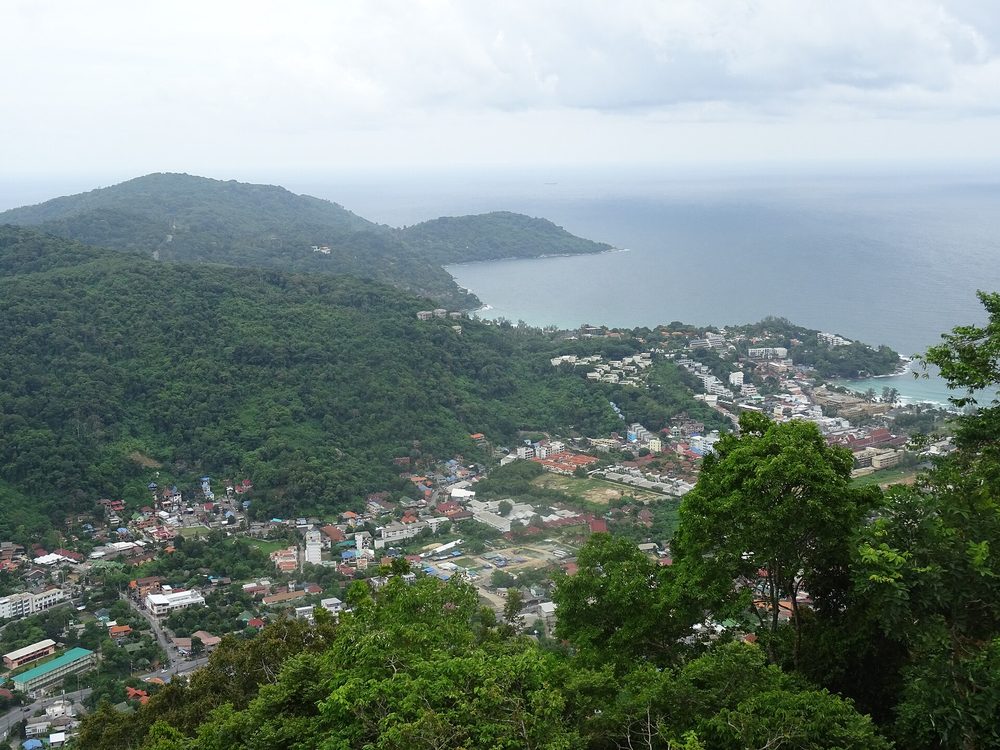
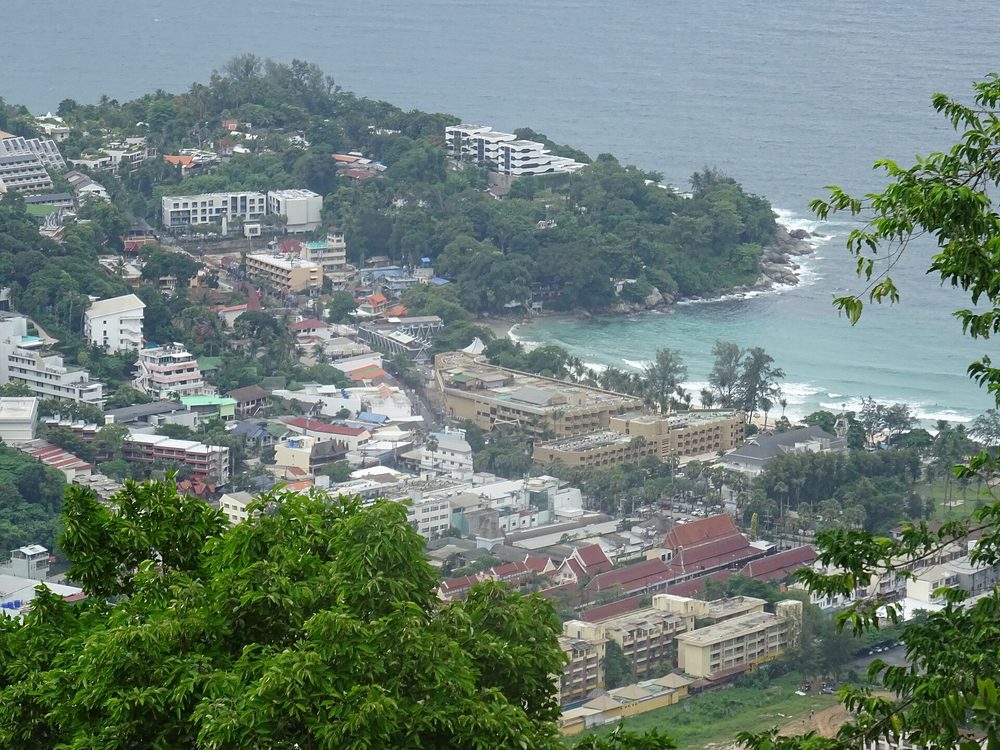
To the south — beyond the headland, the quiet Kata Noi bay with the Katathani hotel, and further along the road the Karon Viewpoint.
Kata is small, and its low-lying part is easy to walk: from the beach to the markets is about ten minutes. Walking down from the hills is easy, but climbing back up is hard — there you need a scooter or a taxi.
Glossary
What the names in listings mean
| Name | What it actually is |
|---|---|
| Kata | The beach and the village. Listings often give the address as “Karon”, because Kata is part of Karon subdistrict. |
| Kata Noi | A separate small bay beyond the headland south of Kata. |
| Kata Palm | The Phuket Smart Bus stop in Kata. |
| Big Buddha | The Buddha statue on the hill above Kata and Karon; the slopes next to it have villas. |
4. Karon on the map: what is where
Karon is one long bay: the beach stretches for about 3.3 kilometres. Officially Karon is a subdistrict of about 23 km², and it includes the neighbouring Kata beach. Patong is about 5 kilometres north in a straight line over the hill, and Kata about 3 kilometres south.

From the sea inland, the area is laid out like this:
By the water — the beach, with a beach road right behind the sand. Hotels and cafés line it.
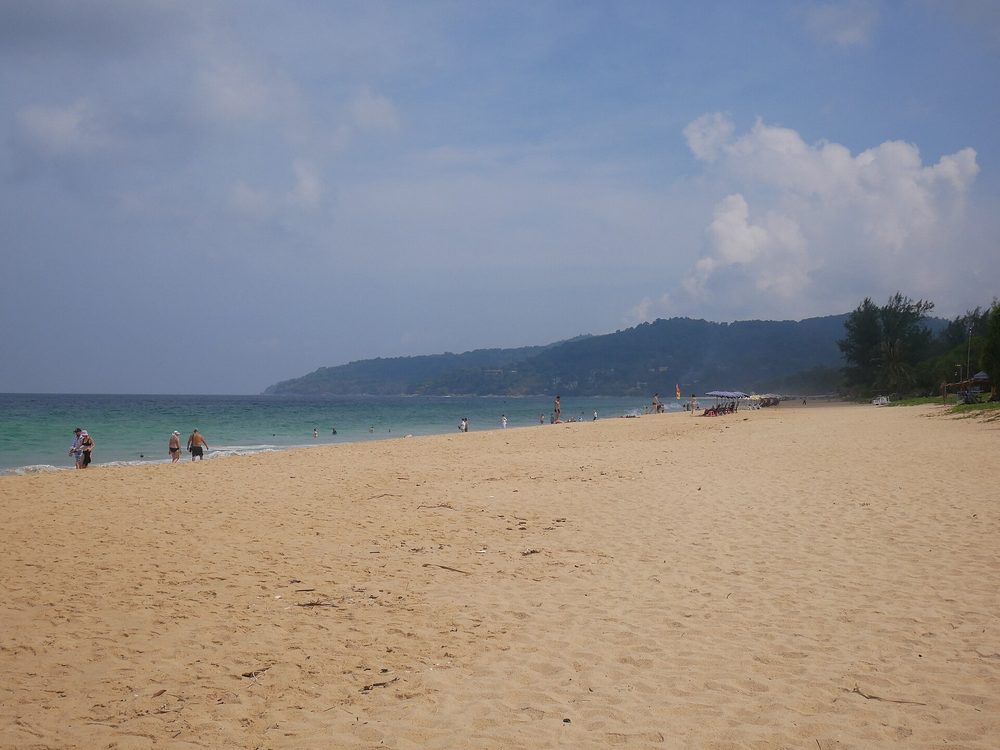
The centre — around the Karon Circle roundabout at the north end of the beach: Karon Plaza shopping centre, a night market, cafés, bars and mini-marts. All within a few hundred metres of the sea.
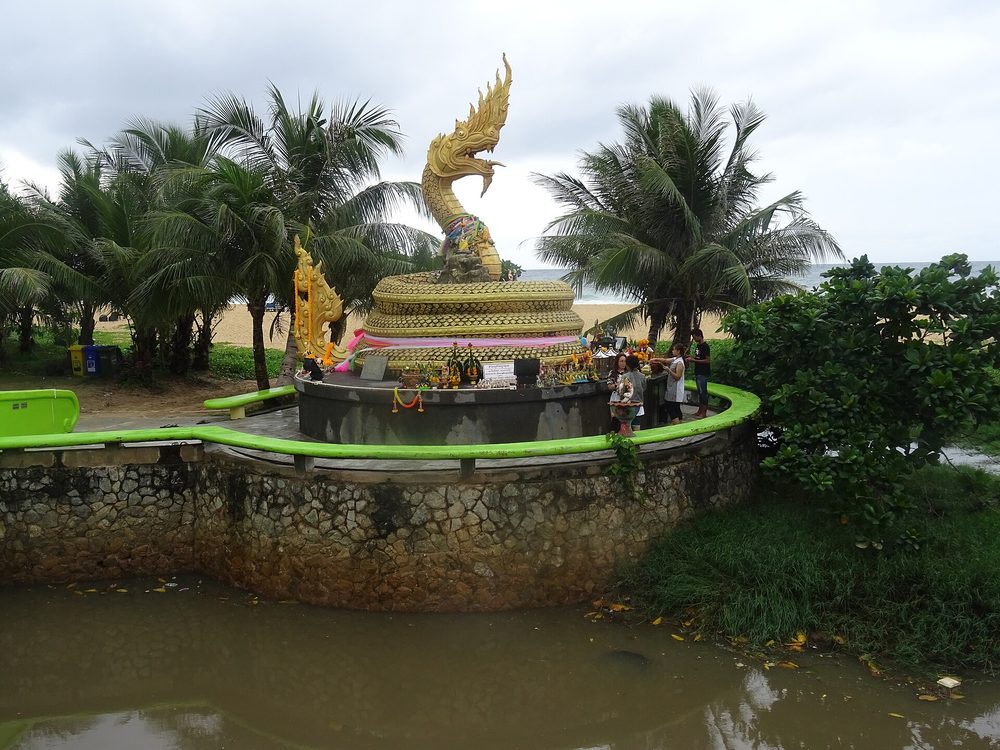
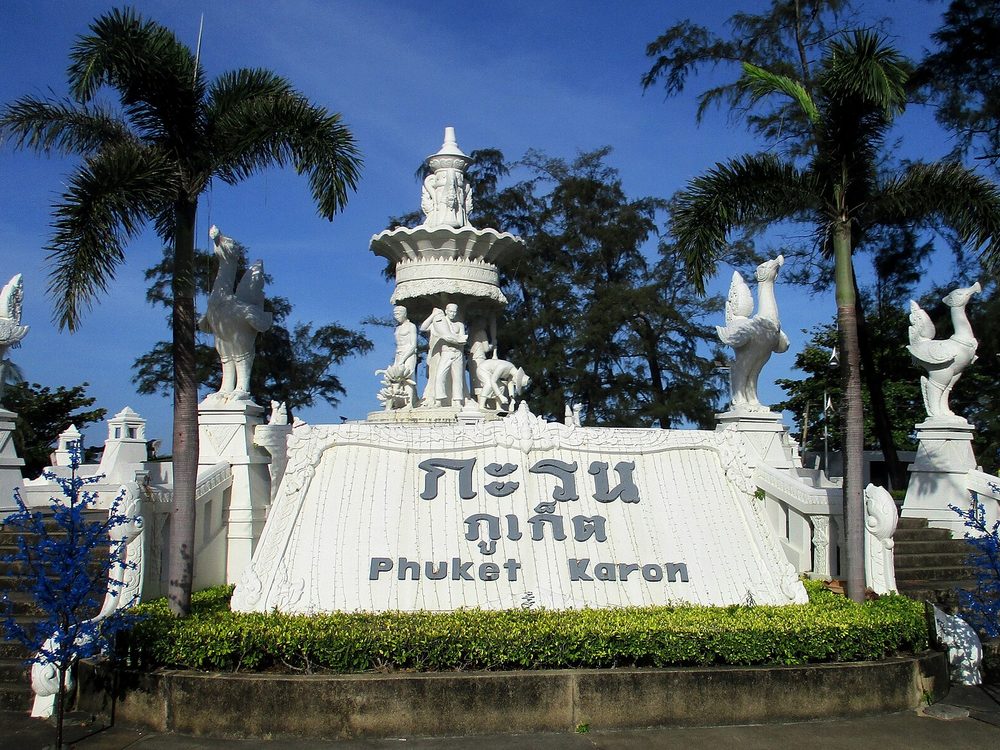
Patak Road — the area’s main road, about half a kilometre from the sea. Along it are Wat Karon with its market, clinics and housing.
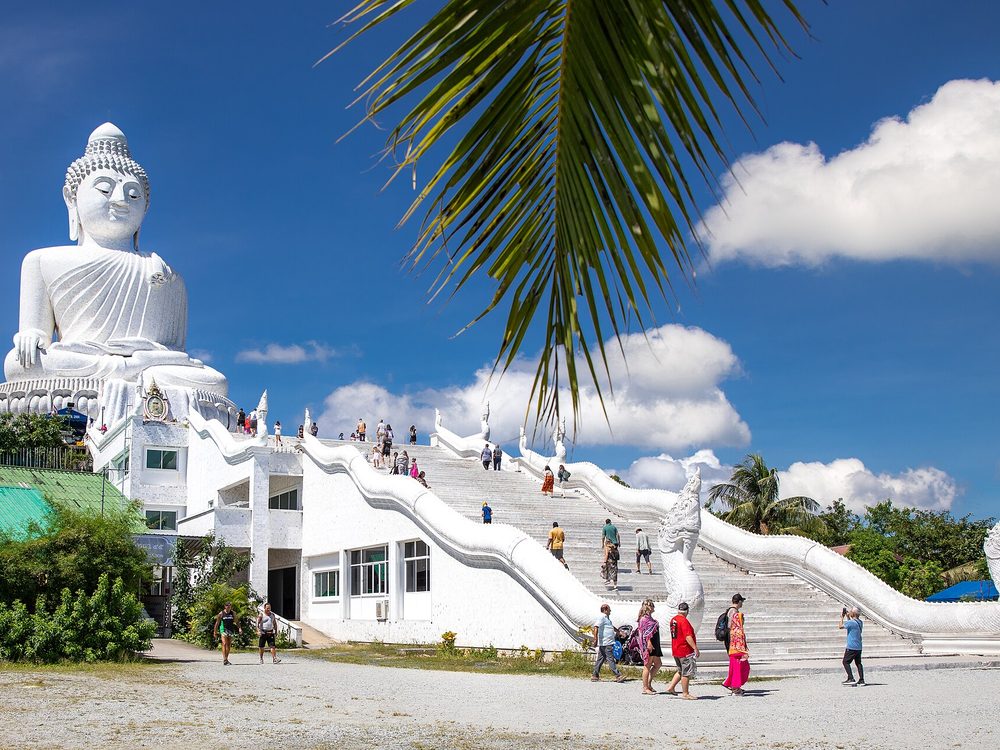
The hillsides — beyond Patak Road the hills begin, with apartments and villas with sea views. On one of the hills, about 2 kilometres from the beach, sits the Big Buddha.
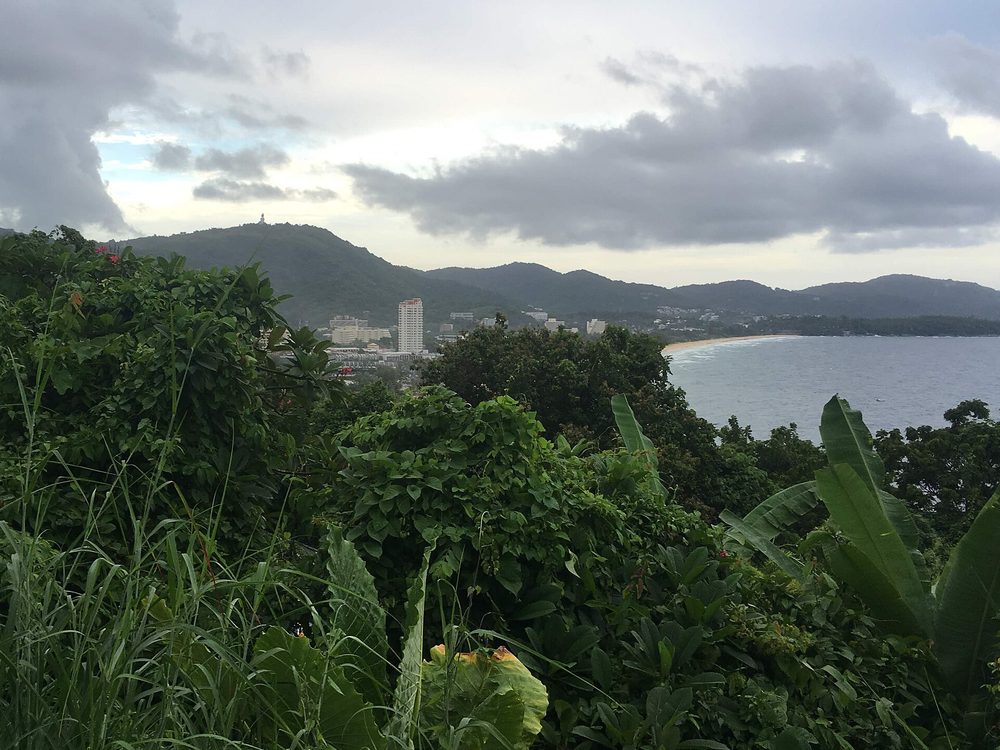
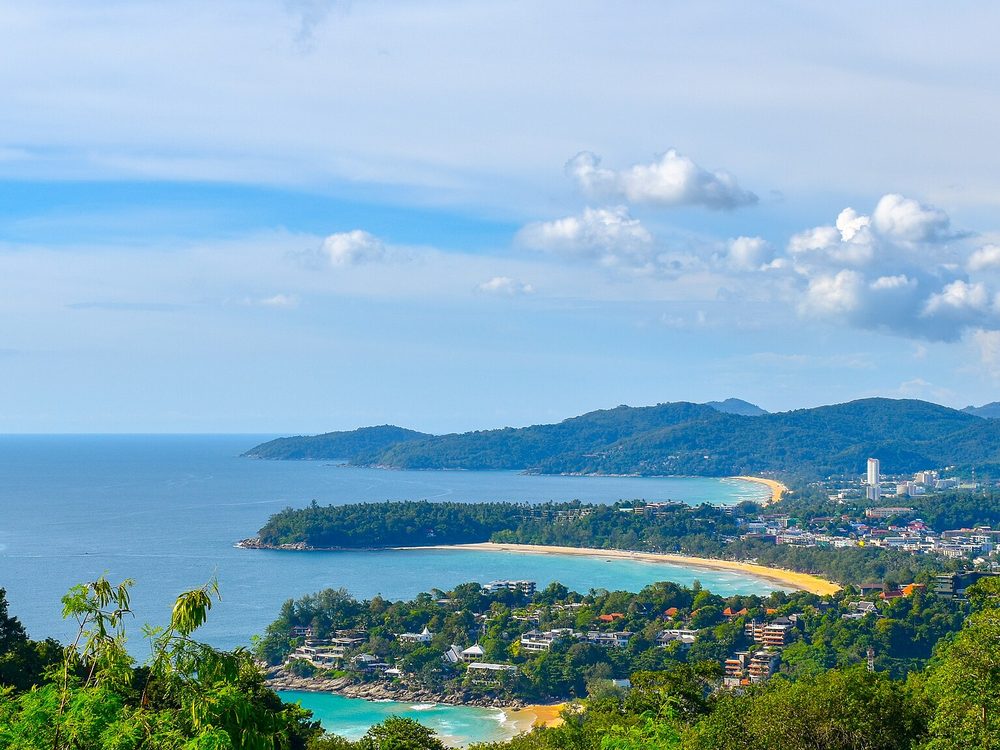
At the edges — to the north the small bay of Karon Noi with the Le Méridien hotel. To the south, Kata and Kata Noi beaches, and beyond them the Karon Viewpoint, from which all three bays are visible.
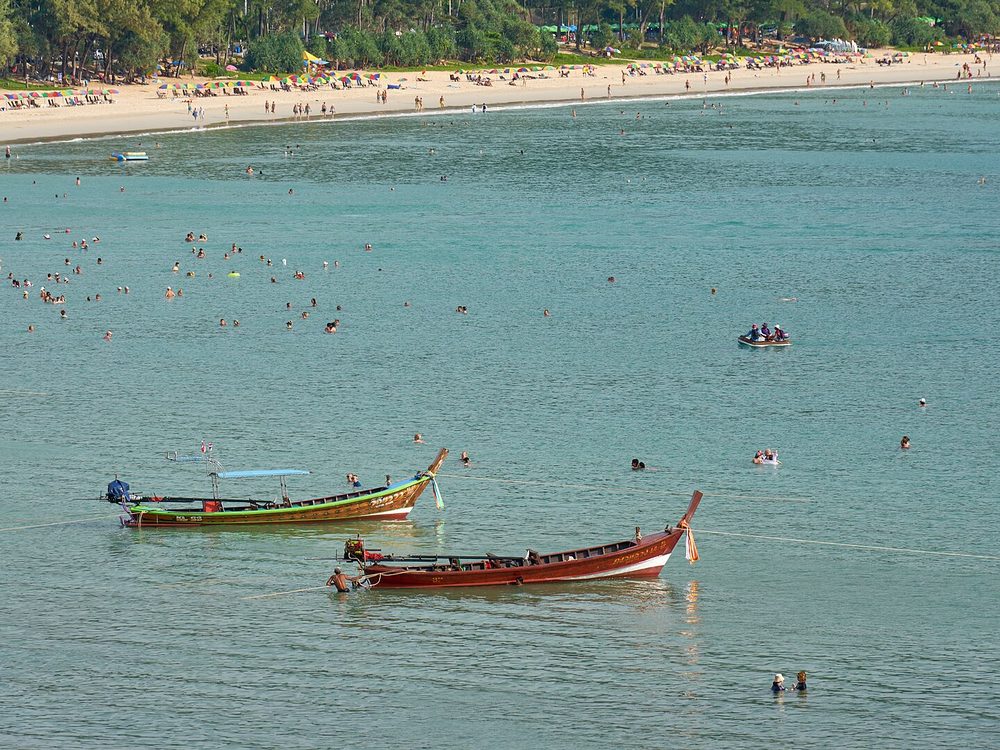
Everything that matters — the beach, the centre and the market — fits within about a kilometre, and much can be done on foot. But the area stretches along the beach, and the hillside apartments are uphill, so people usually drive from there.
Glossary
What the names in listings mean
| Name | What it actually is |
|---|---|
| Karon | Both the beach and the subdistrict. The subdistrict includes Kata, so “Karon” in a listing may turn out to be Kata. |
| Kata, Kata Noi | Neighbouring beaches to the south, in the same subdistrict. |
| Karon Noi | A small bay to the north, with the Le Méridien hotel. |
| Patak Road | The area’s main road, about half a kilometre from the beach. |
| Karon Hill | The name for the hillsides above the beach; the word appears in the names of complexes. |
| Karon tambon | A subdistrict of Mueang Phuket district. |
5. A day in Kata and in Karon
Maps show where things are. But living somewhere means repeating the same routines every day. Let’s walk through an ordinary day in both areas and see where it happens and what it is made of.
Morning: getting to the sea
Kata. From the centre to the beach is about 400 metres, a 5-minute walk. From the hills people come down by scooter or car. From May to October Kata has big waves: surfers come then, and you should only swim where the lifeguards allow it.
Karon. The beach is long, with the beach road right behind the sand, so you usually cross it to reach the sea. From the centre and Patak Road the water is about half a kilometre away, 5–10 minutes on foot. From the hillsides people go down by scooter or car: walking back uphill in the heat is hard.
Children: kindergarten and school
Kata. For children there is the British school BCIS in neighbouring Chalong, which takes children from 2 to 18. The school itself says Kata Beach is 15–30 minutes away. A year of schooling in 2026/27 costs from 302,000 baht for children aged 2–5 to 403,500 baht in the junior years.
Karon. The same BCIS: the school says Karon Beach is also 15–30 minutes away.
Errands: shops, market, doctor
Kata. Everything for daily life is around the central roundabout: two markets, a night market, Lotus’s, mini-marts and clinics, within a kilometre of the sea. The big supermarket and DIY stores are in Chalong, about 5 kilometres away. The road to the big hospitals also runs through Chalong: they are in Phuket Town, the island’s main town, about 12 kilometres away in a straight line.
Karon. Everyday life is gathered around the Karon Circle roundabout and along Patak Road: Karon Plaza, mini-marts, private clinics. Twice a week there is a market in the temple grounds. For big shopping — HomePro, Lotus’s, Makro — people go to Chalong, and for serious medical care to the hospitals of Phuket Town, the island’s main town, about 10 kilometres away in a straight line.
Getting around the island
Kata. The Phuket Smart Bus from the airport runs along the west coast and stops in Kata at Kata Palm; a ticket costs 100 baht. The centre of Karon is about three kilometres away, Chalong about five.
Karon. The same bus also runs through Karon, with two stops: Karon Circle and Karon Stadium. The road to Patong goes over the hill.
Evening
Kata. In the evening — the night market and Kata Night Plaza near the centre, restaurants by the beach and sunset over the sea with Koh Pu island.
Karon. In the evening — restaurants and bars by the beach and around Karon Circle, the night market next to Karon Plaza, and on market days the market at the temple. The sunset, as in Kata, is right over the sea. Karon is noticeably quieter than Patong; for nightlife people go there.
Night and quiet
Kata. It is quietest on the hills and away from the centre, noisier near the night market and the beach bars. There is construction on the slopes.
Karon. It is quietest away from the bars and the beach road. The hillsides are calmer, but they are being built up actively, and a new construction site may well start next to your home.
And in the rainy season
Kata. From May to October the beach has big waves and red flags, but this is the surfing season. In heavy downpours the low-lying areas flood. And the main risk is the slopes: the 2024 landslide came down in Kata itself.
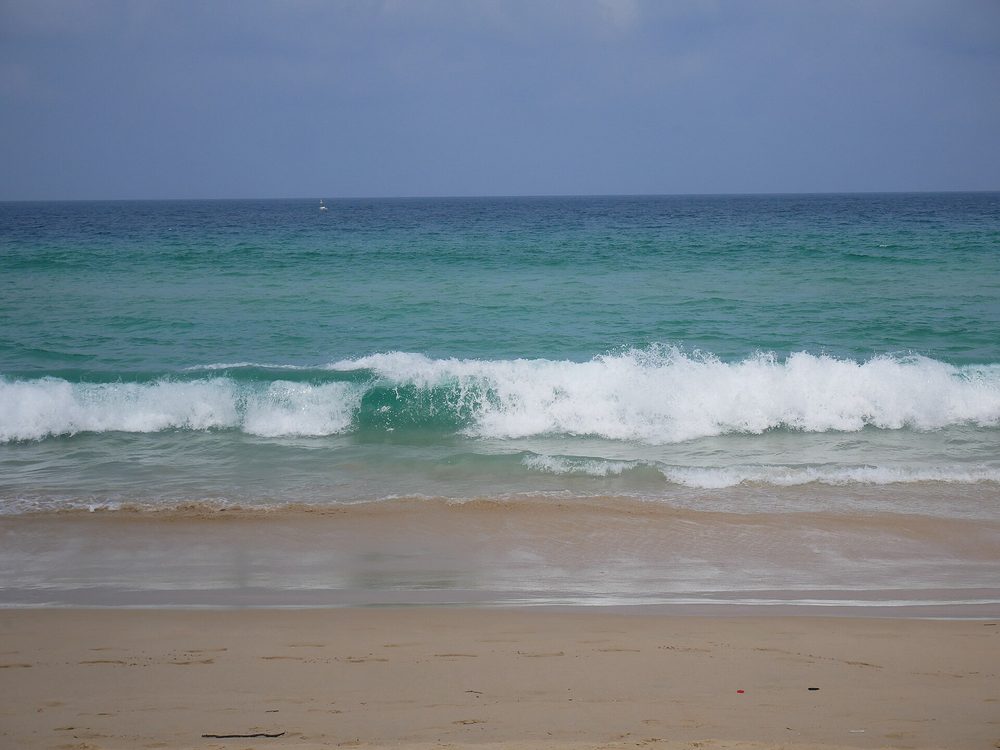
Karon. From May to October the beach has big waves and strong rip currents, and red flags go up. Lifeguards say that on Karon alone they pull three or four people out of the water a day. Downpours flood Patak Road and the Nong Harn roundabout. And on the slopes landslides are a danger.
In short
A day: comparison
| Kata | Karon | |
|---|---|---|
| To the sea | About 400 m on foot from the centre; from the hills — by transport | From the centre and Patak Road about 0.5 km on foot; from the hillsides by transport |
| Children | BCIS in Chalong — 15–30 minutes | BCIS in Chalong — 15–30 minutes |
| Shops and doctor | Markets, Lotus’s and clinics in the centre; big stores in Chalong | Clinics and mini-marts near the centre; big shops and hospitals in Chalong and town |
| Transport | Bus stop at Kata Palm; Chalong about 5 km away | Two bus stops; Kata close by, Patong over the hill |
| Evening | Night market, Kata Night Plaza, beach restaurants | Restaurants and bars by the beach, a night market, the temple market |
| Noise | Near the centre and bars; construction on the slopes | Bars and the beach road; construction on the hillsides |
| Rainy season | Waves and surfing season, low-lying flooding, landslides on the slopes | Rip currents, flooding on Patak Road, landslides on the hillsides |
6. Where the areas are heading
Neither district has free flat land left by the sea, so both are growing the same way — up the hills. The difference is scale.
Kata is growing on the hills
Kata’s biggest new project is SO Origin Kata: according to property portals, about 690 apartments in five buildings, due for completion at the end of 2026. Phenomenon Residence, with about 390 apartments, is being built nearby. On the beach, Club Med has been renewed: it reopened in 2022 after a major renovation.
Karon is growing up the hillsides
The strip by the beach has long been taken by hotels, so new housing in Karon is climbing the hills. Here are a few projects on sale now: Ever Prime Residences Karon on a hillside — about 450 apartments, VIP Venus Karon — 214 apartments in an eight-storey building, The Balance by the Beach — 112 apartments, and Vibe Residence Karon, due for completion at the end of 2028. Hotels are being renewed too: the former Hilton has operated as a Pullman since 2023 after a renovation.
Building on slopes has become easier: since 14 December 2024 new rules in Phuket allow plots up to about 80 metres above sea level to be built on — with drainage and slope reinforcement. For a buyer this means that the choice of sea-view apartments in both Karon and Kata will grow. But such an apartment needs stricter checks than usual: drainage, retaining walls, permits — both its own and those of neighbouring construction further up the hill.
7. What is for sale here
In both areas, essentially two things are sold: apartments and villas. The difference between them is not just size, but what exactly you end up owning.
Apartment
Apartments are sold in residential complexes — in Thailand such a building is called a condominium. A complex usually has a shared pool, gym and security, and a management company keeps things in order.
A foreigner can register an apartment in their own name outright and permanently — this is called freehold. There are two conditions. First, foreigners may own no more than 49% of the total floor area of all units in a building, so before buying you check whether the foreign quota is still available. Second, the money for the purchase must come from abroad, and the bank issues a certificate confirming this.
Villa
A villa is a detached house with its own plot, usually with a private pool. This is more complicated: a foreigner cannot buy land in Thailand in their own name. So the land is most often taken on a long-term lease, usually 30 years — this is called leasehold — and the house itself is registered separately. The law does not guarantee renewal of the lease after 30 years; it is written into the contract.
In short: an apartment is ownership, a villa is usually a long land lease plus a house. That is neither better nor worse, but a villa’s documents need closer checking.
What is sold where
In Kata, apartments are sold in complexes near the centre and on the hills — for example Kata Ocean View, SO Origin Kata and The Beach Condotel — while villas stand on the slopes around the bay and near Kata Noi. Some apartments and villas are sold as leasehold, that is, a long-term lease rather than ownership — check this before buying. In Karon, the beach and Patak Road have mostly small complexes and hotels, and new condominiums are being built on the slopes. Some villas are held through a Thai company — that option needs a separate check by a lawyer.
Prices
Below are real listings for both districts as of early November 2026. These are sellers’ asking prices, not transaction prices, and the sample is small, so look at the order of magnitude rather than the exact amounts.
Prices
Sample listings for sale
| Kata | Karon | |
|---|---|---|
| One-bedroom apartment | 2.7–6.55 million baht for 26–53 m²: from 75,000 to 170,000 baht per m² | 3.5–9.7 million baht for 33–56 m²: from 76,000 to 227,000 baht per m² |
| Larger apartment | 2 bedrooms, 65–154 m² — 5.5–19.8 million baht (73,000–162,000 baht per m²) | 2 bedrooms, 60–167 m² — 6.2–15.5 million baht (84,000–156,000 baht per m²) |
| Villa | 3 bedrooms, 550 m², 900 m² plot — 59 million baht, land on lease | 5 bedrooms, 330 m² near Karon Beach — 25 million baht, held through a company |
Price depends heavily on how new the building is, the view and how far it is to the sea. So the areas cannot be compared directly on these figures: they only show the range to look in.
8. Money: costs, renting, living and resale
Buy to rent, live here yourself or do both. First, let’s look at what you will pay either way.
What you will pay
An apartment comes with a mandatory monthly fee for the upkeep of the complex: the pool, cleaning, security. For example, listings for Kata Ocean View and VIP Kata in Kata give a fee of about 60 baht per m² a month — 2,400–3,000 baht for a 40–50 m² apartment. At Karon View in Karon it is about 9,900 baht a month for a 155 m² apartment, roughly 64 baht per m². On top of that, when you get the keys in a new building you make a one-off payment into the building’s sinking fund. A villa may also have shared fees, and you will have to maintain the pool and garden and pay for repairs.
Long-term rental
A one-year contract: the tenant pays monthly and covers electricity and water. Income is lower, but it is calmer: you do not have to find new guests every few days.
For example, listings from autumn 2026. In Kata: a 30 m² one-bedroom apartment — 18,000 baht a month, a one-bedroom apartment at Kata Top View — 30,000 baht, a three-bedroom villa — about 98,000 baht, with cleaning, garden and pool already included. In Karon: a 74 m² one-bedroom apartment — 33,800 baht on a one-year contract, an 81 m² two-bedroom apartment — 49,000 baht. The rate depends heavily on the complex and the season, so it is best to judge the real price by 5–10 similar listings in the chosen spot.
Short-term rental
Guests come for a few days, as in a hotel. They pay more per night, but the property often stands empty, especially in the rainy season. AirROI, a service that collects Airbnb data, counts Kata and Karon together as one area: over the past year, properties here were occupied about 40% of nights.
Something else matters too: under Thai law, renting an apartment out by the night counts as running a hotel, and it is not allowed everywhere without a licence. On top of that, every complex has its own rules — some ban short-term rentals. This is checked before buying.
If you rent through a management company rather than yourself, it takes a share of the income: usually 20–30% for short-term rentals and 10–20% for annual leases. Booking sites take another 12–15%. So the owner receives noticeably less of the nightly rate than the listings suggest.
Live here yourself
In Kata the beach, markets and centre are within a kilometre, so much can be done on foot. In Karon walking is convenient near the centre at the north end of the beach; from the slopes people drive. The BCIS school in Chalong is 15–30 minutes from both districts.
Beyond the complex fee, the main cost is electricity, mostly air-conditioning. And while you are away, someone has to look after the apartment: in the rainy season it needs airing and checking for leaks. A management company usually takes care of this.
Live here part of the year and rent it out
What matters is which months you come. Homes rent best from November to April; in the rainy season, from May to October, there are fewer guests. If you live here in winter, you will be renting out in the weak months, and income will be well below the annual figure. If you come in summer and rent out in winter, it works out better.
This only works with short-term rental: a one-year lease leaves no room for your own stays. So you need a short-term rental licence and the complex’s consent, and the check-ins between your visits are usually handed to a management company.
Resale
There is no public data on how much and how quickly property resells here. One thing is clear: in both districts you will be selling next to new projects on the slopes, and in Kata also next to the large SO Origin. The easiest thing to sell is a mid-sized apartment with clear paperwork — it can be bought both by someone who will live in it and by someone who will rent it out.
9. Which to choose for your goal
Choice
Where you win with different goals
| Goal | Leans towards | Why |
|---|---|---|
| Living with school-age children | No clear winner | The BCIS school in Chalong is 15–30 minutes from both districts. Kata is a little closer to Chalong, about 5 kilometres. |
| Living without a car | Kata, more likely | Beach, markets, supermarket and clinics within a kilometre. In Karon, without transport, only the centre at the north end of the beach is convenient. |
| Living with a car or scooter | Both areas | With transport, sea-view apartments and villas on the slopes open up in both districts. |
| Surfing | Kata | From May to October there are waves here, and Kata hosts competitions. |
| A quiet beach | Kata, more likely | The little Kata Noi bay beyond the headland is a quiet spot with a single large hotel. |
| Long beach walks | Karon | A beach of about 3.3 kilometres against Kata’s 1.4 kilometres. |
| Nightlife | Karon, more likely | Bars by the beach and Karon Circle, and Patong is closer, over the hill. |
| Long-term rental | No clear winner | Rates depend on the complex. For those who want everything within walking distance, the centre of Kata or Karon is more convenient. |
| Short-term rental | No clear winner | AirROI counts both districts together: occupancy of about 40% of nights. First check the licence and the complex’s rules. |
| Sea-view apartment | Both areas | New complexes on the slopes in both districts. Check drainage, retaining walls and permits. |
| Lower entry price | Kata, more likely | In listings, one-bedroom apartments start from 2.7 million baht in Kata and from 3.5 million baht in Karon. |
10. How a purchase works and what to check
Buying in Thailand is simpler than it seems, but several parties are involved: the agent, the lawyer, the bank and the land office. Here is how it usually goes, step by step.
1. Search: developer or agent
A new apartment is bought from the developer — directly or through an agent. In that case the developer pays the agent’s commission, and the price is the same for you. A resale home from a private owner is almost always sold through an agency. Here too the seller usually pays the commission, most often 3–5% of the price, but terms vary, so ask about it straight away.
2. Viewing
Many people first view properties by video, but it is better to see the chosen home yourself or send someone you trust: the walk to the sea, noise and nearby construction do not show up on video. What exactly to check on site is in the list below.
3. Reservation
Once a property is chosen, you pay a small reservation deposit — the seller takes it off the market while it is checked. The amount and the refund terms are set out in the reservation agreement.
4. Your own lawyer
This is the key step. You hire the lawyer yourself; they must not work for the seller or the agent. At the land office they check the title deed, debts and encumbrances, the building permit and whether the building still has foreign quota available, and they read the contract. For a villa, they also check the land lease: its term, the renewal conditions and what happens to the house.
5. Contract and payment
Next, the sale and purchase agreement is signed. A new build is usually paid for in instalments as construction progresses; a finished home with a deposit at signing and the balance at registration. The money is transferred from abroad to a Thai account, stating property purchase as the purpose of payment. The bank issues a transfer certificate — without it, an apartment cannot be registered to a foreigner.
6. Registration
The transaction is registered at the provincial land office, after which you are the owner. You do not have to attend in person: a lawyer can do it under a power of attorney. Fees are paid here too: 2% of the appraised value for the transfer (the contract decides who pays, often split in half), while the seller pays their own taxes — 3.3% or 0.5% plus income tax. If you are leasing land for a villa, the lease agreement is registered, with a fee of about 1% of the total rent for the whole term.
7. Keys
After registration, the handover certificate is signed, you receive the keys and start paying the complex’s maintenance fees. If you plan to rent the property out, this is also when you choose a management company.
In short: the agent searches, the lawyer checks, the bank confirms the transfer, and the land office registers. Buying a finished home usually takes a few weeks; with a new build, you wait until construction is complete.
Checklist
Before paying a deposit
- The exact address and the route to the sea — on foot, not on a map.
- The plot in the rain: drainage, elevation, gradient and retaining walls — especially on the slopes in both districts.
- For a hillside: is there construction or a steep cut further up the hill?
- Noise at different times of day: the night market and bars in central Kata, the beach road and bars in Karon, construction on the slopes in both.
- Whether short-term rental is allowed in this particular building.
- Title to the land and the building, the foreign quota, payment history; for leasehold — how many years of the lease remain.
How to choose
Three steps
- 01
Define your goal
Living there yourself, renting out, or both: this decides which area wins.
- 02
Check the address
Not the area name, but the point on the map: the route to the beach, the terrain, nearby construction.
- 03
Ask for the numbers
A year of rental and cost reports for the specific property, not area averages.
11. Risks and how we can help
You can choose an area yourself: everything discussed above can be checked on a map, in listings and in conversation with the seller. It gets harder with a specific property and its documents. These are the problems buyers in Phuket run into most often:
- Land “held through a Thai company”. So that a foreigner can own the land under a villa, sellers sometimes offer to register it to a Thai company whose Thai co-owners exist only on paper. The law prohibits this, and such property can be lost.
- Land with an incomplete title. Land documents in Thailand come in different kinds, and not all of them give full ownership. On the hills there are plots where building should never have been allowed at all.
- An apartment beyond the quota. If a building’s foreign quota is already used up, the apartment cannot be registered to you as freehold — you may be offered a lease instead, without always being told so plainly.
- A deposit paid to the wrong person. Money is transferred only under a signed contract and only to an account whose owner your lawyer has verified.
- Promised returns. A “guaranteed income” from a developer is a promise by one particular company, not by the market. If the company runs into trouble, the payments stop.
- Construction delays. A new build is paid for in instalments, and if the developer misses deadlines, your money is tied up. That is why people look at how the developer delivered its previous projects.
- Short-term rental without a licence. Renting an apartment by the night where it is not allowed can bring fines, and the complex may ban the rentals.
Almost all of this is solved by one thing: checking before you pay. That is why the key step in buying is having your own lawyer.
At the same time, Phuket is one of the liveliest resort property markets in Asia: people come here on holiday and move here to live, and developers are bringing thousands of new apartments to market. There are many opportunities here, but also many nuances that are easy to get lost in from the outside.
Need help choosing an area in Phuket?
Leave your email and get a free consultation.
12. Frequently asked questions
Are Kata and Karon different districts?
Officially no: Kata is a village in Karon subdistrict. But they are two different bays with different beaches and their own centres, and life in them differs.
Which area is better for renting out?
Public data shows no winner: AirROI counts both districts together, with occupancy of about 40% of nights. It comes down to the specific property and its reports.
Can you live here with school-age children?
Yes. The BCIS school in Chalong is 15–30 minutes from both districts.
Does “Karon” in a listing mean near Karon Beach?
Not necessarily. Kata is part of Karon subdistrict, so an apartment in Kata can also be called “Karon”. The word Beach in a project’s name does not mean the sea is close. Check the point on the map.
Is it safe to buy on a slope?
Yes, but you need more checks than usual: drainage, retaining walls, permits — its own and those of neighbouring construction further up the hill. In August 2024 a landslide in Kata village killed 13 people.
Can a foreigner buy a villa?
The house itself — yes; the land under it — no. The land is usually leased for 30 years and the house is registered separately. Lease renewal is written into the contract; the law does not guarantee it.
What are freehold and leasehold?
Freehold is full ownership in perpetuity — this is how apartments are registered. Leasehold is a long-term lease, usually for 30 years — this is how the land under a villa is most often held.
Can you buy an apartment without coming to Thailand?
Yes. A lawyer can carry out the registration at the land office under a power of attorney. But it is better to see the property in person or through someone you trust.
Who pays the agent’s commission?
Usually the seller: for new builds the developer, on the resale market the owner, most often 3–5% of the price. Confirm the terms before reserving.
How much does a one-bedroom apartment cost?
Based on listings as of November 2026 — from 2.7 to 6.55 million baht in Kata and from 3.5 to 9.7 million baht in Karon. These are sellers’ asking prices, not transaction prices.
Can you rent an apartment out by the night?
Not everywhere. Under Thai law, renting by the night counts as running a hotel, and many complexes prohibit it in their own rules. Check before buying.
When is the rainy season in Phuket?
Roughly from May to October. At this time there is more rain and more waves, red flags go up on the beaches, roads in low-lying areas flood, and landslides happen on the hillsides.
Sources
- NRCT — study of the “Rak Kata Karon” club: Kata as a village of Karon subdistrict, the legend of the name.
- “Place names of Phuket” (in Thai) — legends of the name Kata, the former landscape.
- Phuket City Info — history of Wat Kata (Wat Kittisangkharam).
- Katathani Collection — opening in November 1984.
- Mom Tri’s Villa Royale — Mom Tri, Club Med on Kata Beach.
- Boathouse — opening on 9 February 1989.
- Club Med — the renewed resort in Kata, 2022.
- Thailand Surfing Federation — competitions in Kata, 2009 and 2022.
- Department of Mineral Resources of Thailand — landslide in Kata village, 23.08.2024.
- EEFIT — report on the 2004 tsunami: Kata, Kata Noi, Karon.
- Lazudi — SO Origin Kata Phuket.
- Keller Henson — Phenomenon Residence.
- PropertyHub — Kata Ocean View, SO Origin Kata, The Beach Condotel, The View; checked 11.11.2026.
- FazWaz — Baan Kata Villa; Kata Ocean View and VIP Kata, maintenance fee; checked 27.10.2026.
- Thailand-Property — rentals in Kata: The Beach Condotel, Kata Top View, Baan Saint Tropez; checked 27.10.2026.
- EEFIT — report on the 2004 Indian Ocean tsunami.
- Palmora Property — management company fees.
- Phuket Expat Guide — agent commissions in Phuket.
- AirROI — Karon (including Kata).
- TAT — Karon and Rawai as subdistricts of Mueang district.
- Prince of Songkla University, Southern Information — origin of the name “กะรน”.
- Wat Suwan Khiri Khet School — general information on Karon tambon, 2023.
- Register of temples in Phuket province — Wat Suwan Khiri Khet.
- The Thaiger, 15.05.2004 — memories of Karon fishing village; The Thaiger, 30.09.2006 — fisherman statue in Karon Park.
- “ชื่อบ้านนามเมืองในภูเก็จ” — tin mine at Ban Hua Kla.
- Alden, “Paradise Lost and Found”, 2009 — the first tourists in Kata and Karon.
- Kata Group — Kata Inn 85, 1985; Phuketindex — opening of Phuket Arcadia in 1987 and the move to Hilton; Hospitality Net — rebranding to Pullman, 2023.
- The Phuket News — late-1980s hotels, including Le Méridien in Karon.
- Wikipedia — Karon Beach: character of the resort.
- Traveller — the Hilton in Karon after the tsunami.
- Window on Phuket — Wat Suwan Khiri Khet (Wat Karon); Karon Temple Market.
- Bangkok Post — landslide in Karon, 13 dead; The Phuket News — Big Buddha construction among the causes.
- Thailand Construction — new hillside building rules from 14.12.2024.
- The Phuket News — lifeguards in Karon.
- Nation Thailand — flooding on Patak Road; The Thaiger — flooding at the Nong Harn roundabout.
- BCIS Phuket — tuition fees 2026/27; location.
- Phuket Smart Bus — timetable and fare; TAT — stops.
- FazWaz — VIP Venus Karon; Hipflat — Ever Prime Residences Karon; The Balance by the Beach; Vibe Residence Karon.
- PropertyHub — sales near Karon Beach; rentals; checked on 10.11.2026.
- FazWaz — villa near Karon Beach; Karon View, maintenance fee; checked on 27.10.2026.
- Map geodata and distances © OpenStreetMap contributors.
Data checked: 27.10–11.11.2026. Prices are listings, not transactions.