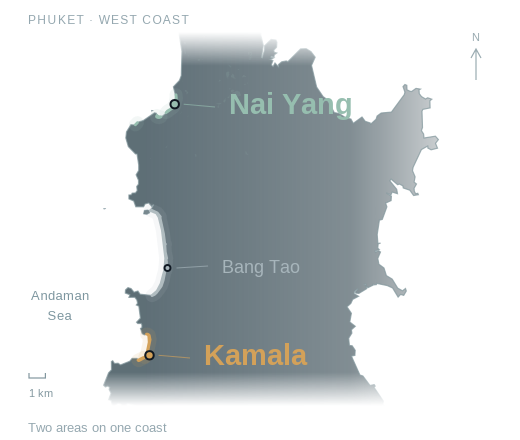
Kamala and Nai Yang are on the same west coast of Phuket, but they are not neighbours: Surin, Bang Tao, Layan and Nai Thon lie between them. They are about 15 kilometres apart in a straight line, roughly half an hour by car.
Both areas grew out of villages where locals still live: Kamala is a Muslim village with mosques and a market, Nai Yang a fishing village with a temple and a mosque. After that, they went different ways. In Kamala, tourism developed around the village: hotels and show parks by the bay, with expensive villas climbing the hills and headlands. Nai Yang stayed quiet: much of its shore is taken up by Sirinat National Park, so there is little coastal development. So Kamala is a village where everything is close and much of it walkable, while Nai Yang is a quiet place close to nature and the airport, where you cannot do without a car.
First, we look at where both areas came from: what was here before the tourists and how each one became what it is today. Without that, it is hard to see why they are so different.
Then we look at them as they are now: how they are laid out, what an ordinary day looks like for a resident, and where the areas are heading — what is being built and how that will change them over the next few years.
At the end come the conclusions: which area suits whom, what is known about rental returns, how to buy without overpaying, and whom to contact to check a specific property.
1. Kamala’s backstory
No one knows exactly when the first people settled in Kamala. What is known is who they were: many local families descend from Malay Muslims who moved here from the island of Langkawi and the sultanates of Kedah and Kelantan, in what is now Malaysia. That is why the village has several mosques and only one Buddhist temple.
The name is old too. At first the bay was called “Krabala” — “deep bay”. Over time the word wore down to “Kammara”, and that is how the village still appears in a 1943 directory of Thailand’s Ministry of Interior. Later it was replaced by the similar-sounding “Kamala” — “lotus”.
Before the tourists, Kamala lived off the land and the sea. Rubber trees were planted on the hillsides around the bay: their sap is used to make rubber, and the rubber was sold. Rubber growing began in southern Thailand in the early 20th century, and today the country is the world’s largest exporter of natural rubber. Next to them people planted mixed orchards — a single orchard growing durian, bananas, jackfruit, rambutan, longkong and other fruit all at once. Kamala durians are still a source of local pride. Rice was grown only for the family and not sold, fish came from the sea and water from the streams, so there was almost nothing to buy. There was no tin here, and the mines passed Kamala by.
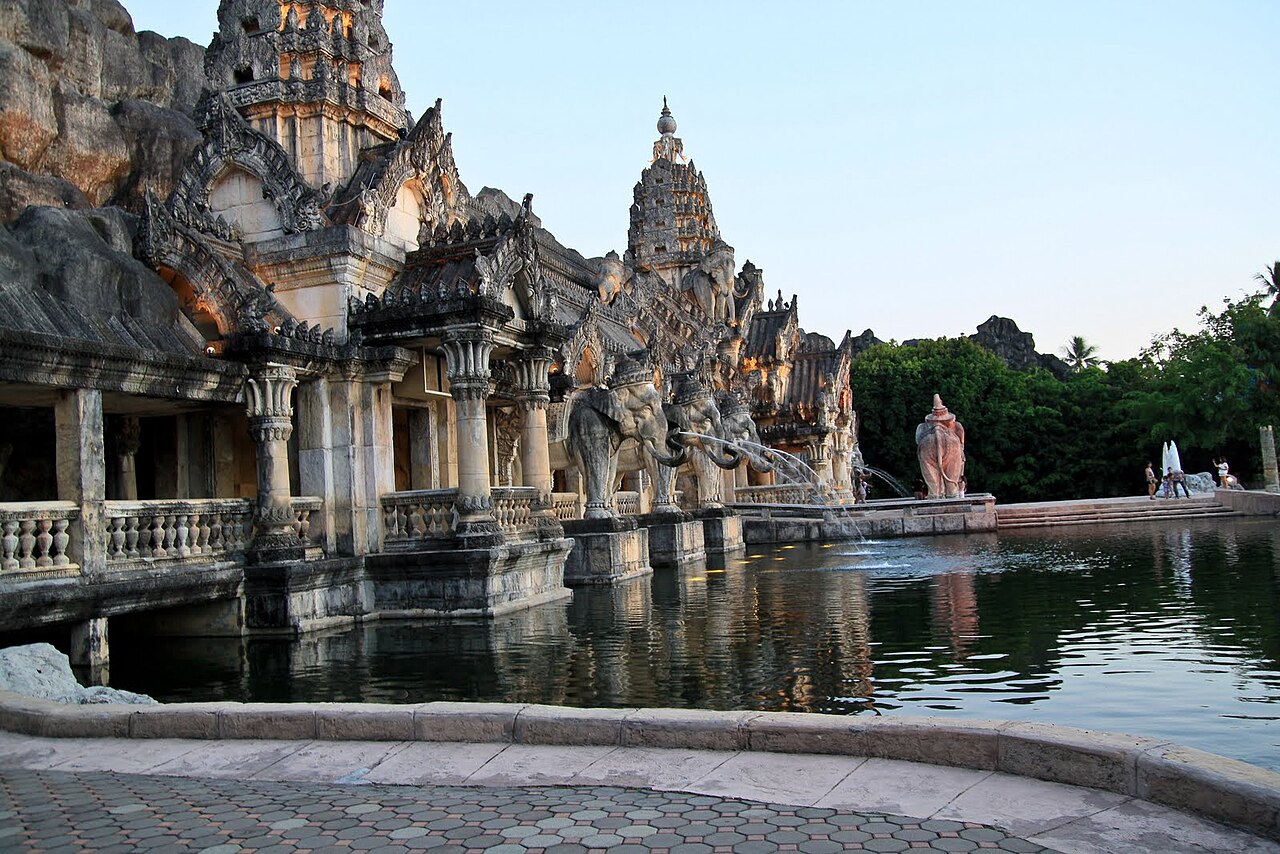
Tourism arrived late. In the 1970s tourists went to Patong and Kata — the island’s best-known beaches further south — while Kamala stayed a village. The first big event was the opening of FantaSea in 1999, an evening theme park with a large show that brought visitors to Kamala from all over the island.
The 2004 tsunami hit Kamala harder than most of the island’s beaches: the water rose up to five metres and destroyed more than two hundred houses near the sea. The village further inland survived, and within nine months almost all the hotels were working again.
After that, tourism layered itself onto the village rather than replacing it. The rice fields gave way to houses, the “Millionaires’ Mile” — a strip of expensive sea-view villas — grew up on the rocky headland near Kamala, and in 2022 a second large evening park, Carnival Magic, with shows and light installations, opened next to FantaSea.
2. Nai Yang’s backstory
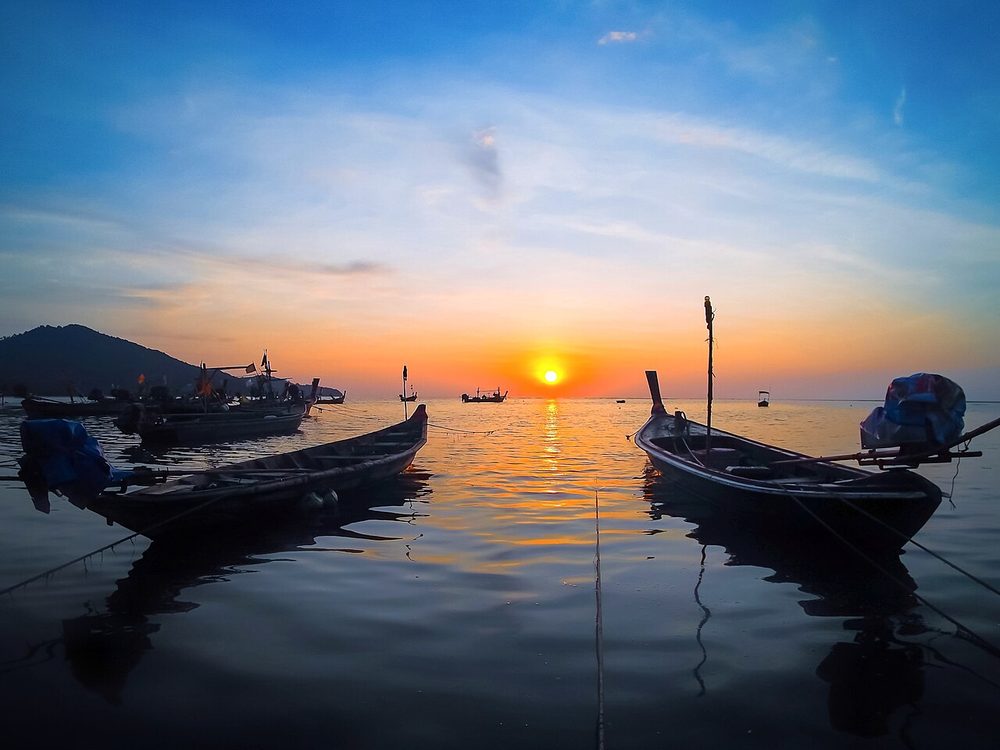
Nai Yang is a village in the north-west of the island, in Sakhu subdistrict of Thalang district. Buddhists and Muslims live side by side here: the village has the Wat Mongkon Wararam temple and a mosque. People made a living from fishing, and in the mornings fishermen still drag their longtail boats up onto the sand.
The key moment in Nai Yang’s history came in 1981: on 13 July the coast around the airport was declared a national park, Thailand’s 32nd. At first it was called Nai Yang National Park, and in 1992 it was renamed Sirinat. The park protected beaches where sea turtles lay their eggs, from November to February.
The park also shaped how the village grows. For decades restaurants and bars stood on the beach, but the land under them belonged to the park. In July 2014 they were removed: navy personnel and park officers took down 11 venues in two days. And in 2016 it emerged that about 1,200 rai of park land had been illegally removed from the park and sold for hotels.
The 2004 tsunami reached Nai Yang too, like the rest of the west coast’s beaches, but the resort recovered quickly. There have always been fewer tourists here than in the south: people come for the quiet beach, the shade of the casuarinas, kitesurfing and the nearby airport.
3. Kamala on the map: what is where
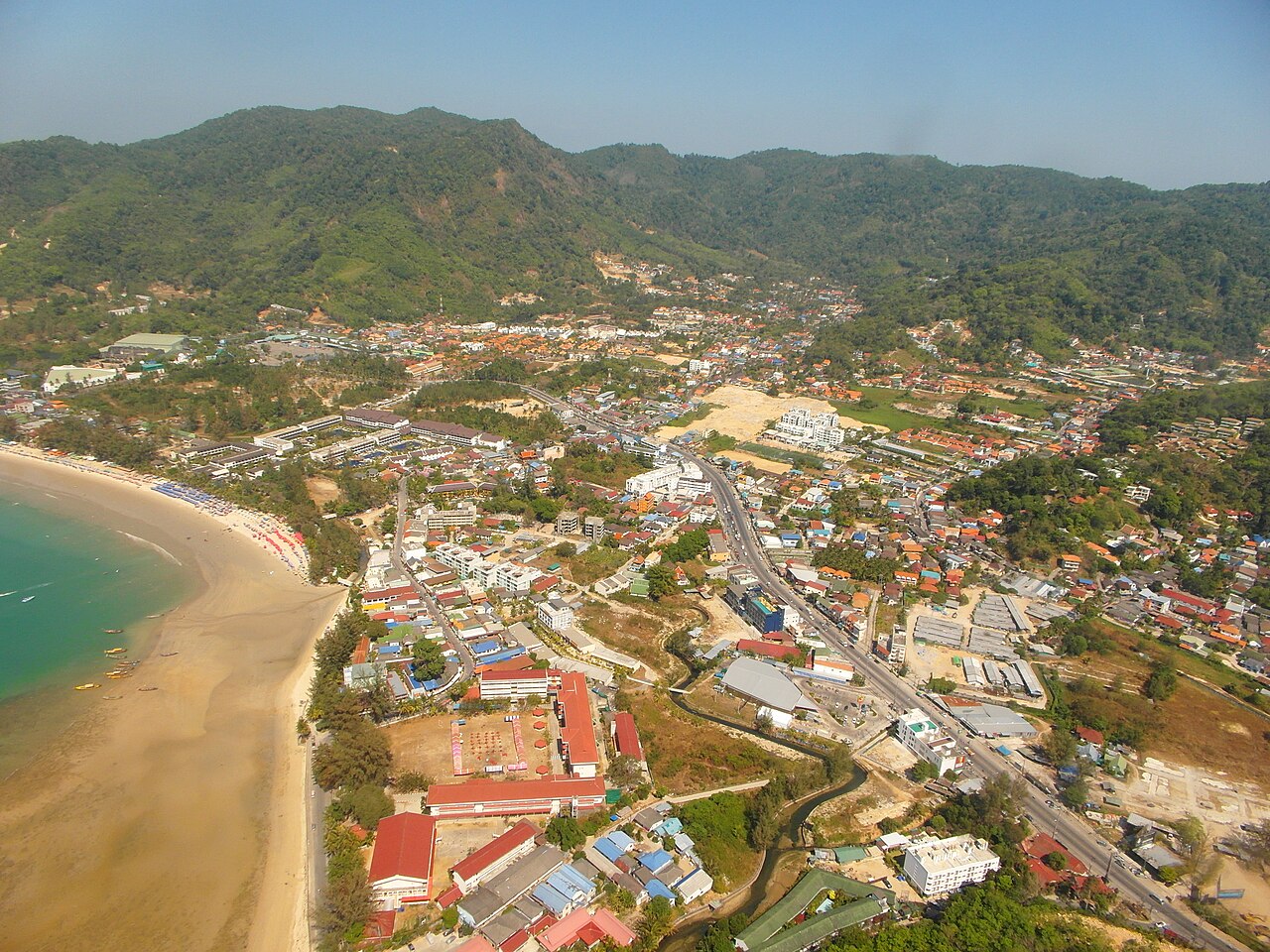
Kamala is simple: one bay between two headlands, with the village right behind the beach. Officially Kamala is a subdistrict of about 19 km² made up of six villages, but almost all life is gathered around the bay, and further from the sea the hills begin. Surin is about 3 kilometres to the north, Patong about 6 to the south.

From the sea inland, everything fits within a couple of kilometres:
The beach — about two kilometres along the bay. Hotels and cafés in the north, fishing boats pulled up on the shore in the south.
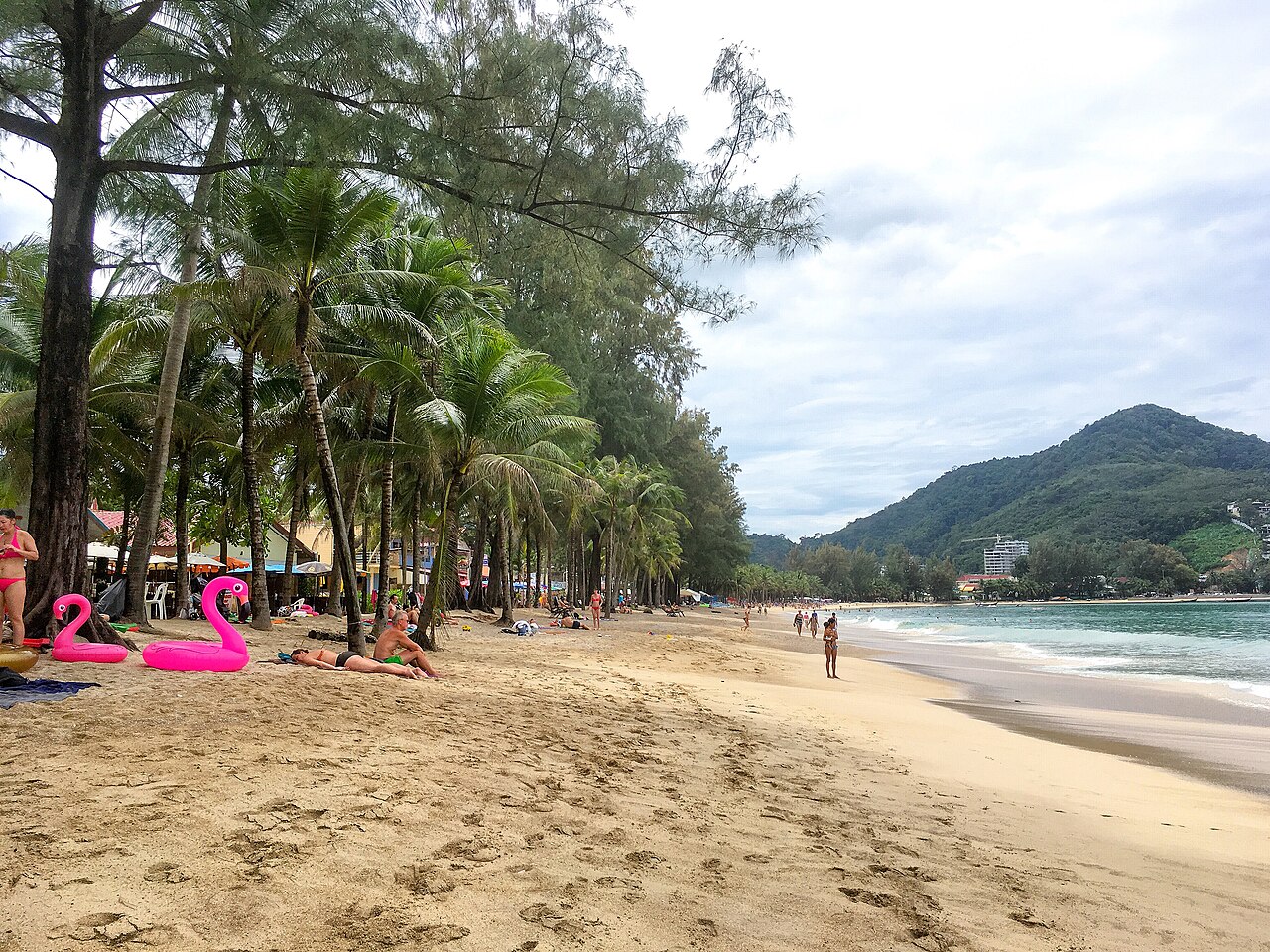
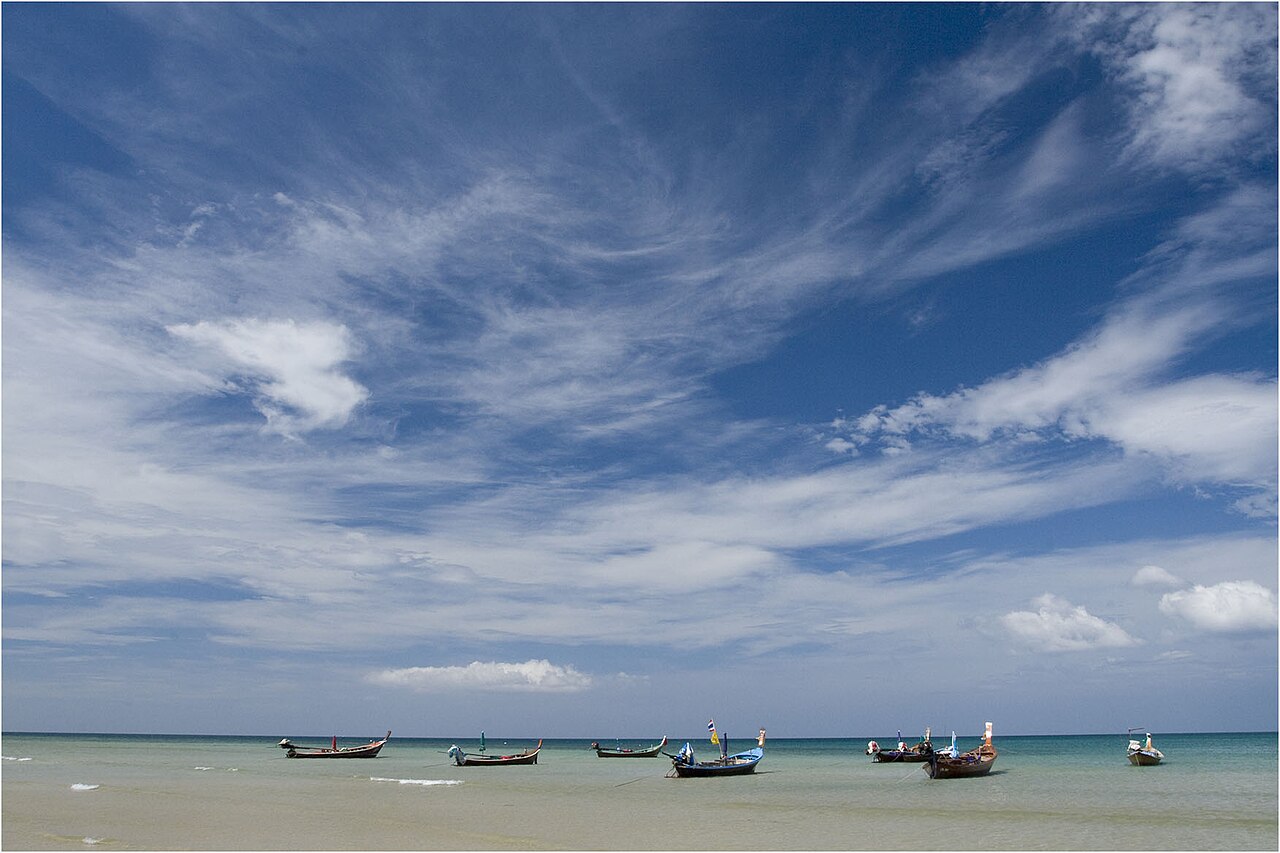
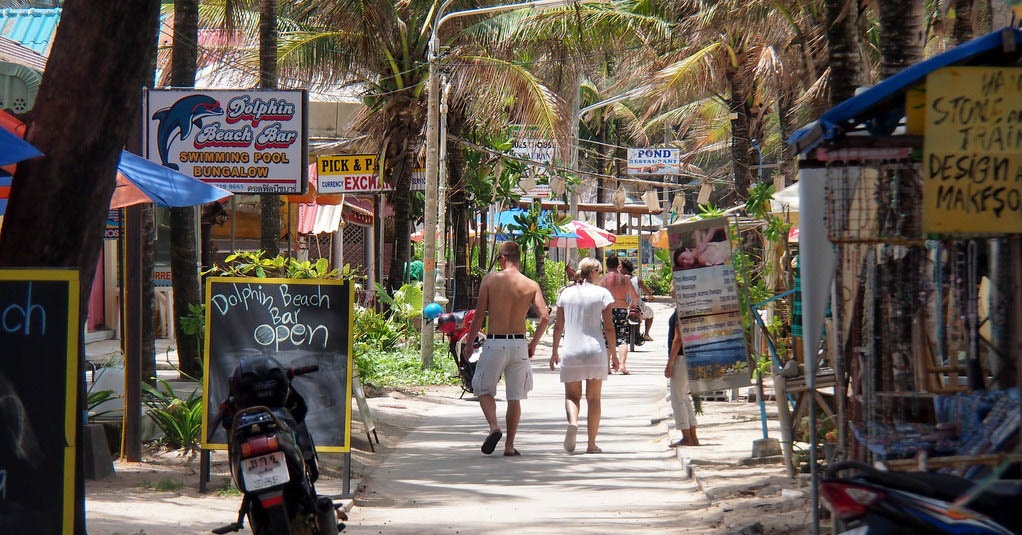
Right behind the beach, in the southern half of the bay — the village itself: market, mosque, hospital, supermarkets, cafés. All of it within a kilometre of the sea, much of it walkable.
At the northern entrance, about a kilometre from the centre — the evening show parks FantaSea and Carnival Magic. On show days the area is busy and traffic is heavier.

On the hills behind the village, 1.5–2 kilometres from the sea — villas overlooking the bay. From here people drive to the beach and the shops rather than walk.
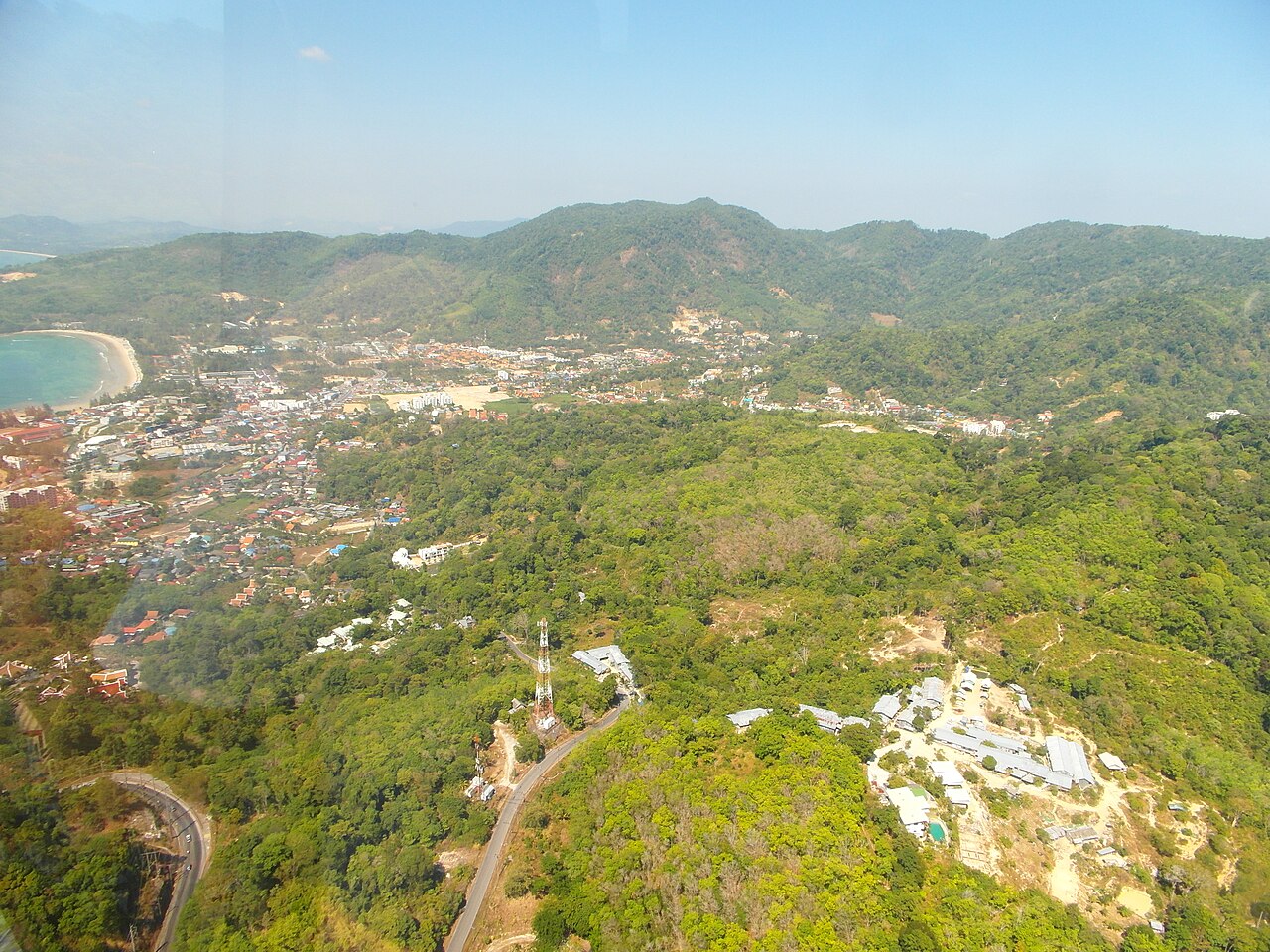
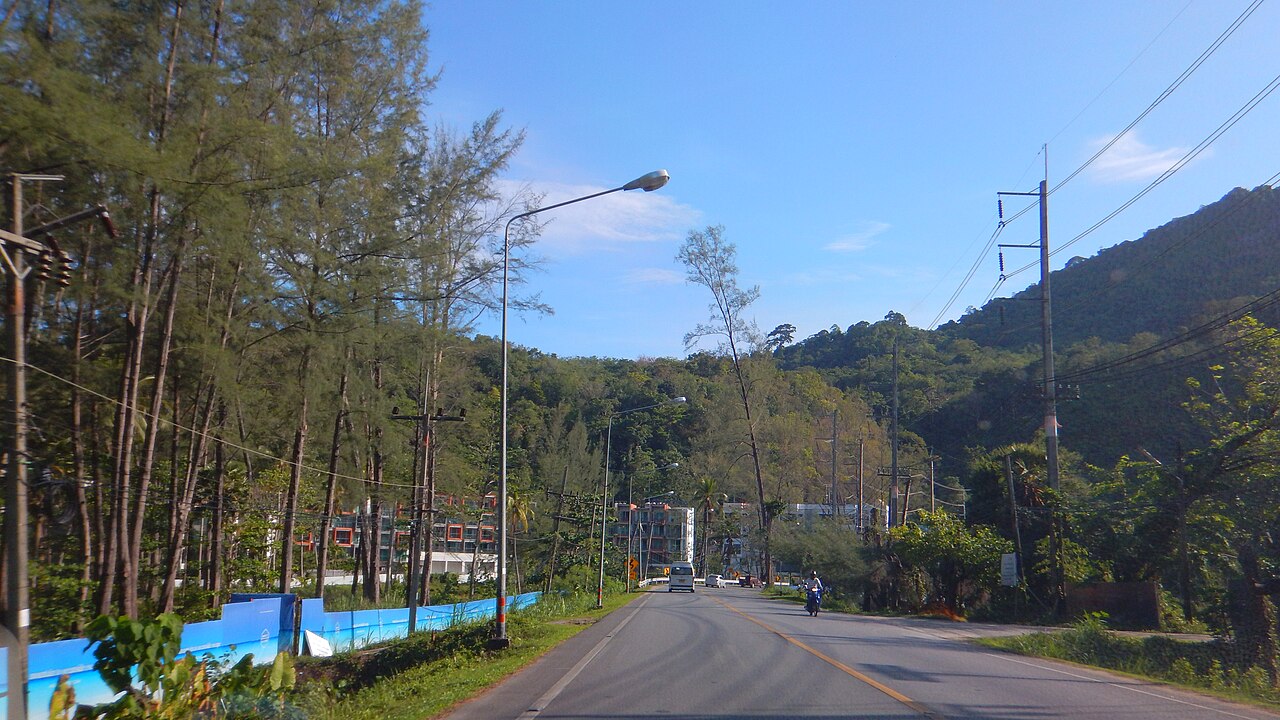
On the headlands at either end of the bay — expensive villas and hotels: Laem Sing headland to the north, towards Surin, and to the south a headland on the road to Patong.
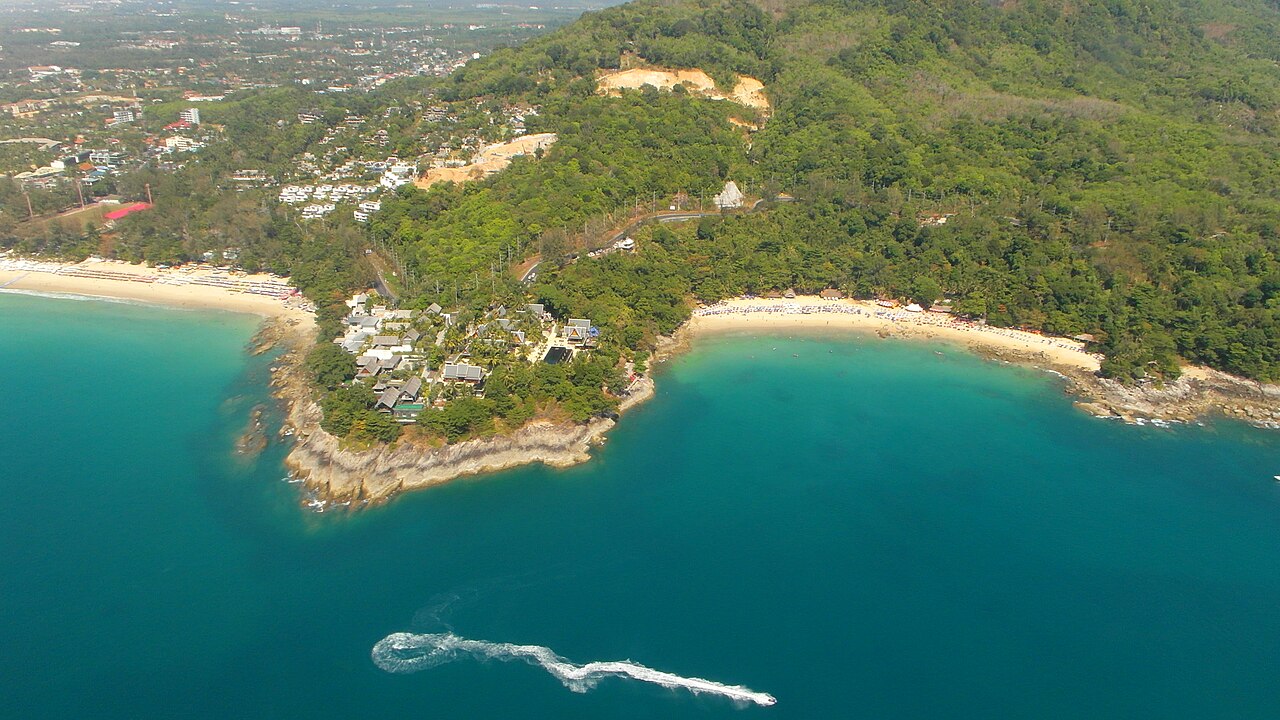
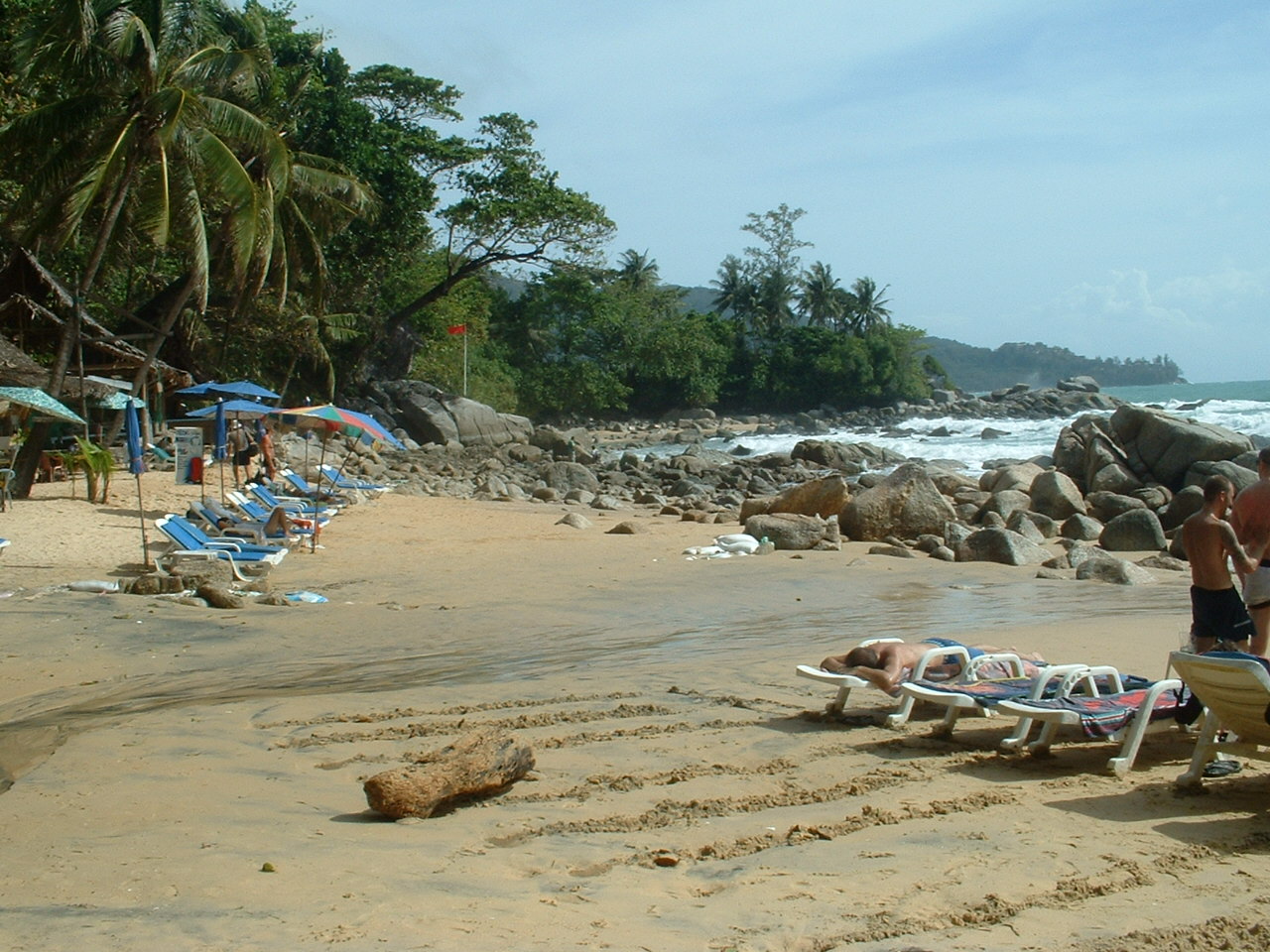
The village has not gone anywhere — tourism grew around it. So local families and newcomers live side by side: hotels and cafés by the sea, the market and mosque across the road, and expensive homes up on the hills and headlands. There is a lot of high-end housing here: in the 2024 C9 Hotelworks study, Kamala ranks first on the island by the number of luxury residences. Little new housing is being built, though: according to C9 Hotelworks as of November 2025, Kamala accounts for about 5% of the new apartments and houses for sale on the island.
In everyday terms, everything is close: the beach, shops, market and hospital are all within a kilometre. Local people live all around, and the call to prayer from the mosque is part of an ordinary day. The main thing for a buyer to remember is the beachfront: in 2004 the tsunami hit it hardest.
Glossary
What the names in listings mean
| Name | What it actually is |
|---|---|
| Kamala, Kammala | One place; the second spelling appears in listings and analytics services, sometimes with different figures. |
| Kamala tambon | An administrative subdistrict of Kathu district, which also includes Patong. |
| FantaSea, Carnival Magic | Evening show parks at the entrance to the village. They bring traffic and noise on show days. |
4. Nai Yang on the map: what is where
Nai Yang is a bay in the north-west of Phuket with a beach of about three kilometres. Officially it is part of Sakhu subdistrict in Thalang district, and the beach itself lies within Sirinat National Park. The airport is about 5 minutes away by car, and Phuket Town about 30 kilometres.

From the sea inland, the village is laid out like this:
By the water — a beach shaded by casuarina trees. Much of the shore is taken up by the national park, so there is little coastal development: trees, sand, cafés and a few hotels, such as the Marriott at the southern end. For foreigners, entry through the park’s official gates costs 200 baht, but roads from the village also lead to the beach. Coral reefs lie 700–1,000 metres offshore.
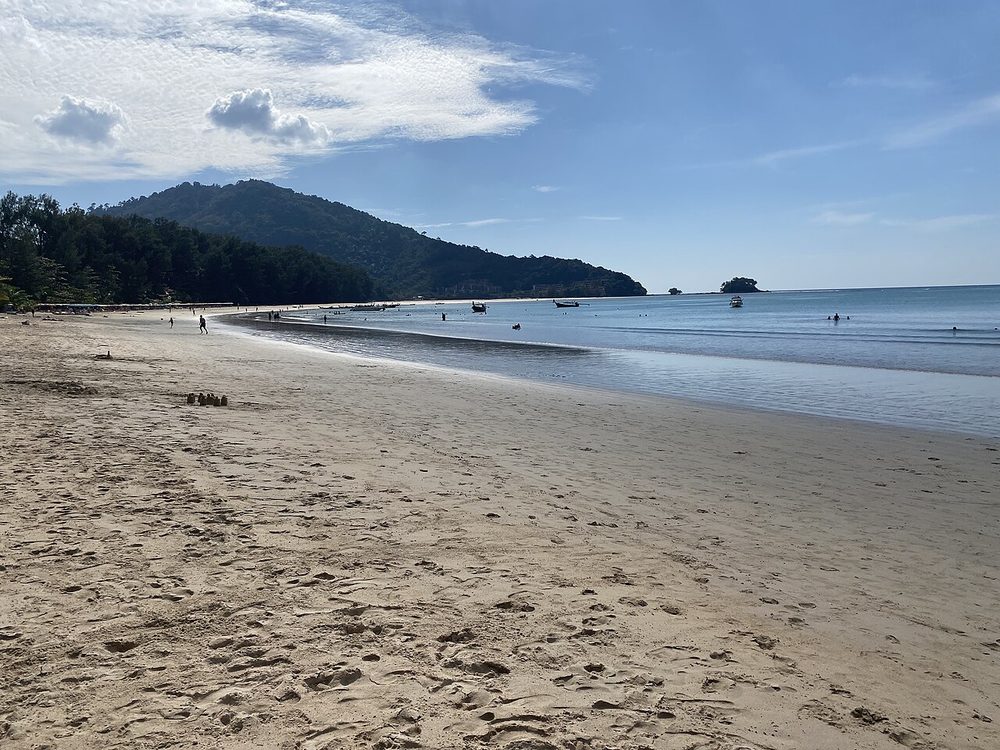
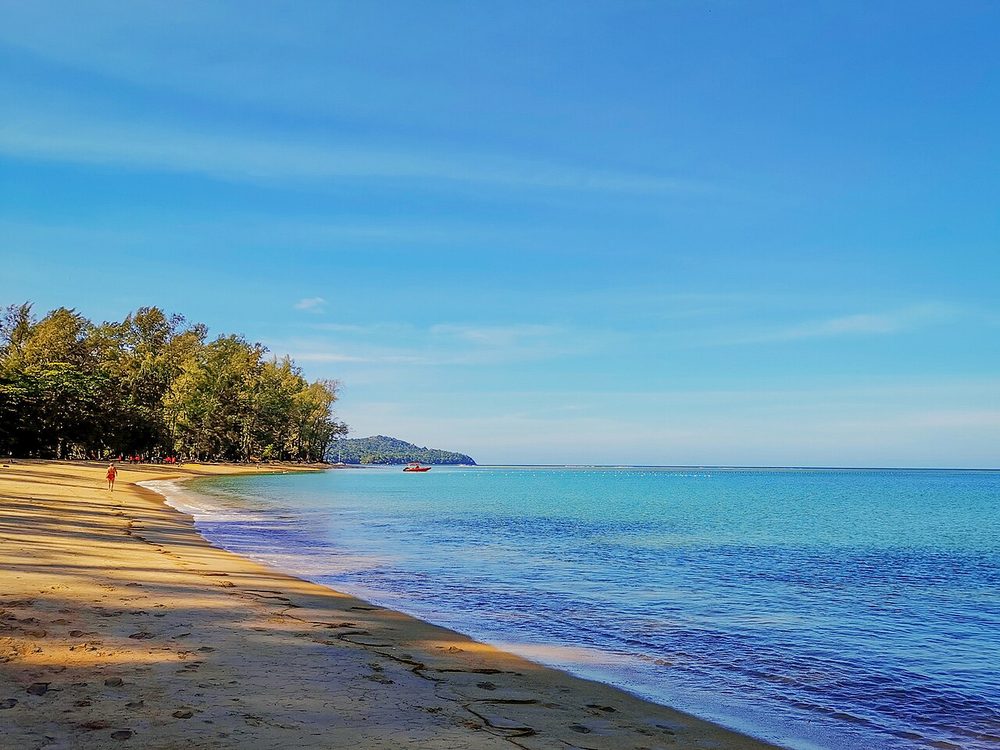
The village — right behind the park, within a kilometre of the sea: a market on Mondays and Wednesdays, a night market, Tops, Big C and Lotus’s go fresh supermarkets, mini-marts, the Wat Mongkon Wararam temple with a Thai school, and a mosque.
Further from the sea — houses and small condominiums along the roads to the airport and the island’s main highway. New complexes are going up here too.
To the north — the airport runway, and beyond it Mai Khao Beach, the longest on the island. Planes land and take off over this end.
The village is small and walkable. But beyond it you need a car or scooter: buses and songthaews are infrequent, and for major shopping trips and medical care people drive to Thalang and further south.
Glossary
What the names in listings mean
| Name | What it actually is |
|---|---|
| Nai Yang, Naiyang | The beach and the village. Spelled differently, it is the same place. |
| Sakhu, Sa Khu | The subdistrict that includes Nai Yang. It also includes neighbouring Nai Thon Beach, so “Sakhu” in a listing does not necessarily mean Nai Yang. |
| Near Airport | A common tag. Check how far the home is from the runway: right at its end the planes are louder. |
| Sirinat (Sirinath) National Park | The national park along Nai Yang, Mai Khao and Nai Thon beaches. Park land cannot be built on, but there are hotels by the beach. |
5. A day in Kamala and in Nai Yang
Let’s walk through an ordinary day in both areas — from the walk to the sea in the morning to the quiet at night.
Morning: getting to the sea
Kamala. From the village people walk to the sea: it sits right behind the beach, and the flat part is easy to get around on foot. Beachgoers recommend the middle and north of the beach, where trees give shade. There is one inconvenience: the main road. It has almost no pavements, and crossing it with children is uncomfortable.
Nai Yang. The beach is a few minutes’ walk from the village. The beach is shaded by casuarinas, shallow at both ends, and almost empty in the morning: fishermen pulling in their boats, the odd swimmer. From May to October the south-west monsoon blows, and kitesurfers ride in the bay.
Children: kindergarten and school
Kamala. The English-language Shining Stars runs a kindergarten and the first two primary years for children aged 2 to 7, at 190,000–210,000 baht a year including meals. Kamala has no international school for older children, so after that the child will be driven to another area: HeadStart in Choeng Thale is about 15 minutes by car.
Nai Yang. The village has a Thai school at the temple. The nearest international schools are in Thalang and Choeng Thale: HeadStart in Choeng Thale is about 20–25 minutes by car without traffic.
Errands: shops, market, doctor
Kamala. Big C supermarket, the market, a clinic (open every day from 9:00 to 20:00) and a hospital — all within a kilometre of the sea. Much of it can be done on foot.
Nai Yang. Daily needs are covered in the village: a market on Mondays and Wednesdays, a night market, Tops, Big C and Lotus’s go fresh, mini-marts. A large Lotus’s is in Thalang, about 10 minutes by car. Thalang’s public hospital is about 15 minutes by car, and the private Bangkok Hospital Phuket about 35–40 minutes.
Getting around the island
Kamala. The Phuket Smart Bus from the airport stops right in the village: by the beach, at FantaSea and at Big C; a ticket costs 100 baht. Surin is a few minutes away by scooter. The slowest road is south: there are traffic jams on the winding road to Patong.
Nai Yang. The airport is about 5 minutes away — the main advantage for frequent flyers. Everything else means a car or scooter: buses and songthaews are infrequent, and you have to wait for taxis. Kamala and Phuket Town are about half an hour away, the southern beaches about an hour.
Evening
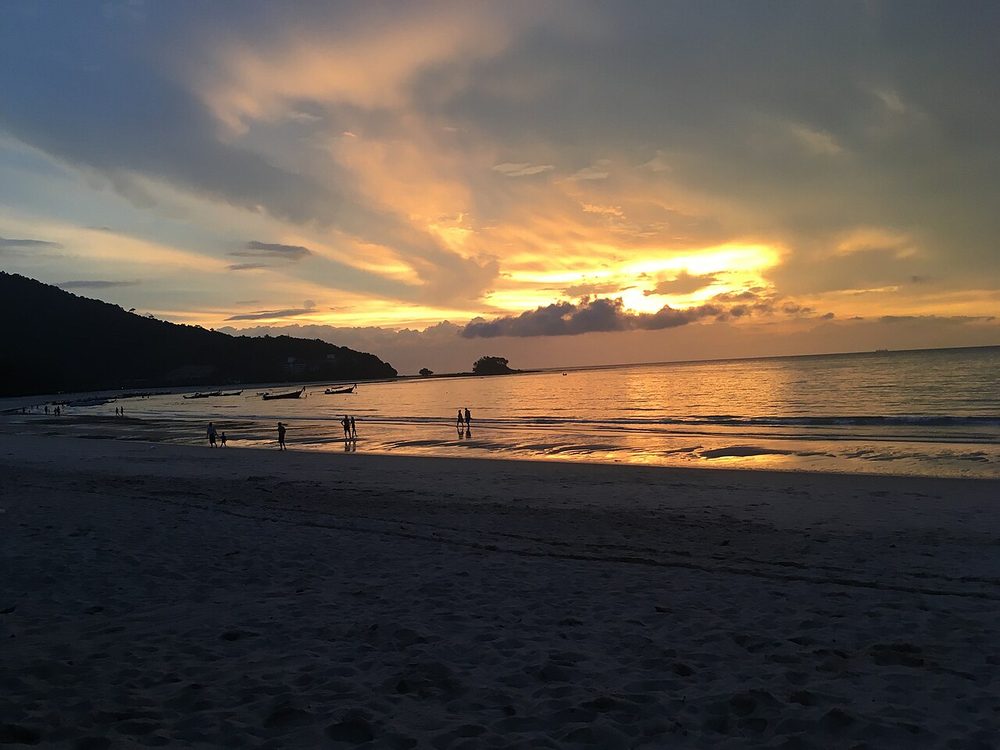
Kamala. Evenings are spent by the water: cafés and massage along the beach, a night market with cheap food and the sunset over the bay. On show days it is busy around FantaSea and Carnival Magic. Beachfront venues close around eleven, bars on the main road by midnight.
Nai Yang. In the evening — sunset over the bay, cafés and bars on the shore, the night market in the village. There is no nightlife: for that people drive south.
Night and quiet
Kamala. Away from the bars it is quiet in the evenings — many people say so. Construction and scooters make noise, and the call to prayer sounds from the mosque five times a day — the first before dawn, around five in the morning.
Nai Yang. Nights are quiet, with no bars playing loud music. The main noise is the planes: they can be heard across the village, most of all at the northern end, closer to the runway.
And in the rainy season
Kamala. The rains begin at the end of May. In downpours, some village streets flood. From June to October there are strong rip currents and red flags on the beach. This is also when the runoff from the canals that flow into the sea is more noticeable. But life does not stop: many restaurants stay open all year, because a lot of locals and expats live here.
Nai Yang. From May to October waves roll onto the shore and flags go up by the water, but this is the kitesurfing season. There are noticeably fewer tourists, and many places by the beach do not open every day.
In short
A typical day compared
| Kamala | Nai Yang | |
|---|---|---|
| To the sea | On foot from the village, the beach is right behind the houses | A few minutes’ walk from the village |
| Children | Shining Stars up to age 7; HeadStart about 15 minutes away | Thai school in the village; HeadStart — 20–25 minutes |
| Shops and doctor | Within a kilometre of the sea; much of it on foot | Markets and supermarkets in the village; Thalang hospital — about 15 minutes |
| Transport | The bus stops in the village; traffic jams on the way to Patong | Airport 5 minutes away; everything else by car |
| Evening | Beachfront promenade, night market, show parks; bars until midnight | Sunset, beach cafés, night market |
| Noise | Quiet away from the bars; construction, scooters, the mosque | Quiet at night; planes can be heard |
| Rainy season | Some streets flood, currents, canal runoff | Waves and kitesurfing; fewer tourists |
6. Where the areas are heading
Once you know where both areas came from, it is easy to see how they are growing now. Development in Kamala is happening project by project, while Nai Yang is growing inland, beyond the national park boundary.
Kamala is developing in pockets
Kamala has almost no free flat land: the village fills the bay, and the hills start right behind it. So new things appear here as separate projects rather than whole neighbourhoods. According to C9 Hotelworks as of November 2025, there were 2,132 new homes — apartments and houses — for sale in Kamala, about 5% of the island’s new housing. The largest recent project is THE TITLE Vivana Kamala, worth 2 billion baht, launched in early 2026.
Expensive housing is moving up onto the hills and headlands, where sea-view villas are being built, while the village below remains a village. For a buyer this means a narrow choice of new homes and fewer new-build neighbours. But here too, new phases add competitors when it comes to renting out.
Nai Yang grows around the airport
Most of the shore is taken up by the park, so new complexes appear further inside the village, a few minutes from the beach. The Title condominiums by developer AssetWise already stand here, and the new projects include The Zero Nai Yang, due in 2028.
The area’s main driver is the airport. Airports of Thailand is fast-tracking the expansion of the international terminal and aircraft stands, scheduled for completion by 2031. The expansion is designed to raise the airport’s capacity to 18 million passengers a year. For a buyer this has two sides: more passengers may mean more people looking for a home near the airport, but there will also be more flights over the village.
7. What is for sale here
In both areas, essentially two things are sold: apartments and villas. The difference between them is not just size, but what exactly you end up owning.
Apartment
Apartments are sold in residential complexes — in Thailand such a building is called a condominium. A complex usually has a shared pool, gym and security, and a management company keeps things in order.
A foreigner can register an apartment in their own name outright and permanently — this is called freehold. There are usually two main conditions. First, foreigners may own no more than 49% of the total floor area of all units in a building, so before buying you check whether the foreign quota is still available. Second, the money for the purchase comes from abroad, and the bank issues a certificate confirming this. There are other legal routes — for example, Thai permanent residence — but most buyers go this way.
Villa
A villa is a detached house with its own plot, usually with a private pool. This is more complicated: as a rule, a foreigner cannot buy land in Thailand in their own name. So the land is most often taken on a long-term lease, usually 30 years — this is called leasehold — and the house itself is registered separately. The law does not guarantee renewal of the lease after 30 years; it is written into the contract.
In short: a foreigner usually buys an apartment freehold, sometimes on a long lease. A common arrangement for a villa is a long-term land lease, with rights to the house registered separately. The terms depend on the property. That is neither better nor worse, but a villa’s documents need closer checking.
What is sold where
In Kamala, there are apartments both by the beach and on the slopes, and villas on the hills and headlands. In Nai Yang, apartments are sold in small complexes inland from the village — for example, The Title Residencies, Title Halo and Happy Place — and villas stand in villa estates on the outskirts and on the hills near neighbouring Nai Thon. There are almost no apartments right by the water: most of the shore belongs to the national park, and what stands by the sea is mostly hotels.
Prices
Below are real listings: for Kamala as of early October, for Nai Yang as of November 2026. These are sellers’ asking prices, not transaction prices, and the sample is small, so look at the order of magnitude rather than exact amounts.
Prices
Sample listings for sale
| Kamala | Nai Yang | |
|---|---|---|
| One-bedroom apartment | 5.2–13.6 million baht for 27–59 m²: from 194,000 to 230,000 baht per m² | 1.9–4.95 million baht for 30–67 m²: from 63,000 to 135,000 baht per m² |
| Larger apartment | 2 bedrooms, 91 m² — 7.9 million baht (86,000 baht per m²) | 2 bedrooms, 81 m² — 9.5 million baht (117,000 baht per m²) |
| Villa | 3 bedrooms, 250 m² — 12.9 million baht | 3 bedrooms, 137–370 m² — 6–33.9 million baht |
Price depends heavily on how new the building is, the view and how far it is to the sea. So compare properties of the same type and with the same form of ownership.
8. Money: costs, renting, living and resale
Buy to rent, live here yourself or do both. First, let’s look at what you will pay either way.
What you will pay
An apartment comes with a mandatory monthly fee for the upkeep of the complex: the pool, cleaning, security. For example, in the new The Title complexes in Kamala it is 85 baht per m² a month — about 4,000 baht for a 50 m² apartment. When you receive the keys to a new build, you also make a one-off payment into the building’s sinking fund. A villa may also have shared charges, plus the upkeep of the pool and garden and repairs.
Long-term rental
A one-year contract: the tenant pays monthly and covers electricity and water. Rental income is lower, but managing the property is simpler and more predictable: you do not have to find new guests every few days.
For example, listings from November 2026. In Kamala: a 33 m² one-bedroom — 22,000 baht a month on a one-year lease, a 34–35 m² one-bedroom at CityGate — 25,000–30,000 baht, a 92 m² two-bedroom at Kamala Falls — 49,000 baht. In Nai Yang: a 36 m² one-bedroom at The Title Residencies — 20,000–22,000 baht, a 41 m² apartment near the airport — 20,000 baht, a 23 m² studio — 11,750 baht. The rate depends heavily on the complex and the season, so the real price is best judged from 5–10 similar listings in your chosen spot.
Short-term rental
Guests come for a few days, as they would to a hotel. They pay more per night, but the property often stands empty, especially in the rainy season. According to AirROI, a service that collects Airbnb data, over the past year homes in Kamala were booked for about 40% of nights, and in Sakhu subdistrict, which includes Nai Yang, for about 35%. Seasonality is stronger in Sakhu: in the weakest month a listing earns about a fifth of what it does in the best. But homes here are noticeably cheaper, so work out returns together with the purchase price and costs.
Something else matters too: under Thai law, renting an apartment out by the night counts as running a hotel, and it is not allowed everywhere without a licence. On top of that, every complex has its own rules — some ban short-term rentals. This is checked before buying.
If you rent through a management company rather than yourself, it takes a share of the income, and rates and services vary widely between companies. The booking platform takes its own commission too: under the single-fee model, most hosts pay Airbnb 15.5%. So the owner receives noticeably less of the nightly rate than the listings suggest — before buying, ask the management company for a net-income calculation.
Live here yourself
In Kamala, everything is within a kilometre of the sea and much of it walkable, and there is the English-language Shining Stars for children aged 2–7. In Nai Yang, markets and supermarkets are in the village, the beach is a few minutes away, it is quiet and close to the airport, but you need a car, and for medical care and major shopping trips people drive to Thalang.
Beyond the complex fee, the main cost is electricity, mostly air-conditioning. And while you are away, someone has to look after the apartment: in the rainy season it needs airing and checking for leaks. A management company usually takes care of this.
Live here part of the year and rent it out
What matters is which months you come. Homes rent best from November to April; in the rainy season, from May to October, there are fewer guests. If you live here in winter, you will be renting out in the weak months, and income will be well below the annual figure. If you come in summer and rent out in winter, it works out better.
While you are away, you can let the apartment for a few months at a time or by the night. For nightly rentals, check the licence and the complex’s rules in advance; check-ins are usually handed to a management company.
Resale
In Kamala there are few new apartments for sale, so you will face less competition when selling. Nai Yang is a smaller market with fewer buyers, but there are also few new builds around.
9. Choosing by goal
Choice
Choosing by goal
| Goal | Better fit | Why |
|---|---|---|
| Living with school-age children | No clear winner | Neither area has an international school. HeadStart in Choeng Thale is about 15 minutes by car from Kamala and about 20–25 from Nai Yang. |
| Living with young children (under 7) | Kamala | Shining Stars up to age 7, a clinic, shops and the beach within a kilometre. Nai Yang is quieter and the water is shallow at the ends of the beach, but you will have to drive for almost everything else. |
| Living as a couple or alone, without children | Depends on your lifestyle | Kamala is a village on a bay where everything is walkable, with beach cafés and show parks in the evening. Nai Yang means quiet, nature and the airport nearby, but there is little to do in the evenings. |
| Living without a car | Kamala | The village sits right behind the beach, and the airport bus stops in it. In Nai Yang, you cannot get beyond the village without a car or scooter. |
| Flying often | Nai Yang | The airport is about 5 minutes away. From Kamala it takes about half an hour. |
| Wintering for a few months | Depends on taste | Kamala is a village with a local rhythm, where everything is close. Nai Yang is a place close to nature, where many people come for the winter for the quiet. |
| Kitesurfing | Nai Yang | From May to October the wind blows in the bay and kitesurfing schools operate. |
| Quiet | No clear winner | In Kamala it is quiet away from the bars, but the mosque calls to prayer five times a day, the first around five in the morning. Nai Yang is quiet at night, but you can hear the planes — least on the south side of the village. |
| Long-term rental | No clear winner | Rents in our examples are higher in Kamala; in Nai Yang, both rents and purchase prices are lower. Calculate returns from the purchase price and costs, not from the rent alone. |
| Short-term rental | No clear winner | According to AirROI, about 40% of nights in Kamala and 35% in Sakhu, which includes Nai Yang. Seasonality in Sakhu is stronger, but homes are cheaper: calculate income together with the purchase price. |
| Sea-view villa | Kamala | Villas on the hills and headlands above the bay. Check the view, the access road and the land documents. |
| Smallest budget | Nai Yang | In our selection, one-bedroom apartments start from 1.9 million baht in Nai Yang and from 5.2 million baht in Kamala. |
10. How a purchase works and what to check
Buying in Thailand is simpler than it seems, but several parties are involved: the agent, the lawyer, the bank and the land office. Here is how it usually goes, step by step.
1. Search: developer or agent
A new apartment is bought from the developer — directly or through an agent. In that case the developer usually pays the agent’s commission, but it is still worth comparing the price and promotions with the developer’s direct offer before reserving. A resale home from a private owner is almost always sold through an agency. Here too the seller usually pays the commission, most often 3–5% of the price, but terms vary, so ask about it straight away.
2. Viewing
Many people first view properties by video, but it is better to see the chosen home yourself or send someone you trust: the walk to the sea, noise and nearby construction do not show up on video. What exactly to check on site is in the list below.
3. Your own lawyer
This is the key step, and it starts before any money changes hands. You hire the lawyer yourself; they must not work for the seller or the agent. First they read the reservation terms: who receives the money and when it is refunded. Then, at the land office, they check the title deed, debts and encumbrances, the building permit and whether the building still has foreign quota available, and they read the contract. For a villa, they also check the land lease: its term, the renewal conditions and what happens to the house.
4. Reservation
Once the lawyer has seen the terms, you pay a small reservation deposit — the seller takes the property off the market while the full check is done. The amount and the refund terms are set out in the reservation agreement.
5. Contract and payment
Next, the sale and purchase agreement is signed. A new build is usually paid for in instalments as construction progresses; for a finished home, the buyer pays a deposit at signing and the balance at registration. The money is transferred from abroad to a Thai account, stating property purchase as the purpose of payment. The bank issues a transfer certificate — if the apartment is registered on this basis, it cannot be done without it.
6. Registration
The provincial land office registers either the ownership or the long-term lease. You do not have to attend in person: a lawyer can do it under a power of attorney. Fees are paid here too: 2% of the appraised value for the transfer (the contract decides who pays, often split in half). Most often the seller also pays income tax and 0.5% stamp duty, or, if selling within five years of buying, a 3.3% specific business tax instead of stamp duty. If you are leasing land for a villa, the lease agreement is registered, with a fee of about 1% of the total rent for the whole term. There are exceptions, so it is best to work out the amount for your deal with a lawyer in advance.
7. Keys
After registration, the handover certificate is signed, you receive the keys and start paying the complex’s maintenance fees. If you plan to rent the property out, this is also when you choose a management company.
In short: the agent searches, the lawyer checks, the bank confirms the transfer, and the land office registers. Buying a finished home usually takes a few weeks; with a new build, you wait until construction is complete.
Checklist
Before paying a deposit
- The exact address; walk the route to the beach rather than just checking it on a map.
- The plot in the rain: drainage, elevation and slope — in Kamala some village streets flood in downpours, and on the hills retaining walls matter; in Nai Yang, check for canals and low-lying ground nearby.
- For a hillside: is there construction or a steep cut further up the hill?
- Noise at different times of day: bars, scooters, the mosque and show-park traffic in Kamala, planes in Nai Yang — check which part of the village the flight path crosses.
- Whether short-term rental is allowed in this particular building.
- Title to the land and the building, foreign quota, payment history.
How to choose
Three steps
- 01
Define your goal
Living there yourself, renting out, or both: this decides which area wins.
- 02
Check the address
Not the area name, but the point on the map: the route to the beach, the terrain, nearby construction.
- 03
Ask for the numbers
A year of rental and cost reports for the specific property, not area averages.
11. Risks and how we can help
You can choose an area yourself: everything discussed above can be checked on a map, in listings and in conversation with the seller. It gets harder with a specific property and its documents. These are the problems buyers in Phuket run into most often:
- Land “held through a Thai company”. So that a foreigner can own the land under a villa, sellers sometimes offer to register it to a Thai company whose Thai co-owners exist only on paper. The law prohibits this, and such property can be lost.
- Land with an incomplete title. Land documents in Thailand come in different kinds, and not all of them give full ownership. On the hills there are plots where building should never have been allowed at all.
- The foreign quota is full. If a building’s foreign quota is already used up, the apartment cannot be registered to you as freehold — you may be offered a lease instead, without always being told so plainly.
- A deposit paid to the wrong person. Money is transferred only under a signed contract and only to an account whose owner your lawyer has verified.
- Promised returns. A “guaranteed income” from a developer is a promise by one particular company, not by the market. If the company runs into trouble, the payments stop.
- Construction delays. A new build is paid for in instalments, and if the developer misses deadlines, your money is tied up. That is why people look at how the developer delivered its previous projects.
- Short-term rental without a licence. Renting an apartment by the night where it is not allowed can bring fines, and the complex may ban the rentals.
Almost all of this is solved by one thing: checking before you pay. That is why the key step in buying is having your own lawyer.
At the same time, Phuket is one of the liveliest resort property markets in Asia: people come here on holiday and move here to live, and developers are bringing thousands of new apartments to market. There are many opportunities here, but also many nuances that are easy to get lost in from the outside.
Need help choosing an area in Phuket?
Leave your email and get a free consultation.
12. Frequently asked questions
Which area is better for renting out?
According to AirROI, homes in Kamala are booked for about 40% of nights, and in Sakhu, which includes Nai Yang, about 35%, with stronger seasonality. But homes in Nai Yang are noticeably cheaper. It comes down to the specific property: its price, costs and reports.
Can you live here with school-age children?
You can, but neither area has an international school. HeadStart in Choeng Thale is about 15 minutes by car from Kamala and about 20–25 from Nai Yang. Kamala has the English-language Shining Stars for children aged 2–7, including the first two primary years.
How bad is aircraft noise in Nai Yang?
They can be heard across the village, most of all at the northern end, closer to the runway. There are fewer flights at night. Before buying, come and see the apartment at different times of day.
Can you buy a home right on the beach in Nai Yang?
Hardly: most of the shore is taken up by Sirinat National Park, and what stands by the sea is mostly hotels. If a listing promises a beachfront location, check the land documents especially carefully: some park land was illegally sold in the past.
Do you need a car in Nai Yang?
Yes. You can walk around the village, but for major shopping trips, medical care and other areas people go by car or scooter: buses and songthaews are infrequent.
Is beachfront property in Kamala safe?
In 2004 the tsunami hit Kamala’s beachfront hardest: the water rose up to five metres and destroyed more than two hundred homes by the sea, while the village further inland survived. If you buy by the sea, check the plot’s elevation and the evacuation route.
Can a foreigner buy a villa?
The house itself — yes; the land under it — no. The land is usually leased for 30 years and the house is registered separately. Lease renewal is written into the contract; the law does not guarantee it.
What are freehold and leasehold?
Freehold is full ownership in perpetuity — this is how apartments are registered. Leasehold is a long-term lease, usually for 30 years — this is how the land under a villa is most often held.
Can you buy an apartment without coming to Thailand?
Yes. A lawyer can carry out the registration at the land office under a power of attorney. But it is better to see the property in person or through someone you trust.
Who pays the agent’s commission?
Usually the seller: for new builds the developer, on the resale market the owner, most often 3–5% of the price. Confirm the terms before reserving.
How much does a one-bedroom apartment cost?
From listings — 5.2 to 13.6 million baht in Kamala (October 2026) and 1.9 to 4.95 million baht in Nai Yang (November 2026). These are sellers’ asking prices, not transaction prices.
Can you rent an apartment out by the night?
Not everywhere. Under Thai law, renting by the night counts as running a hotel, and many complexes prohibit it in their own rules. Check before buying.
When is the rainy season in Phuket?
Roughly from May to October. At this time there is more rain and more waves, red flags go up on the beaches, roads in low-lying areas flood, and landslides happen on the hillsides.
Sources
- AirROI — Kamala; AirROI — Airbnb markets in Phuket province: Sakhu.
- Wikipedia — Sirinat National Park: created in 1981, renamed in 1992, turtles, the park land affair.
- Phuket Marriott Resort & Spa, Nai Yang Beach — a hotel by the beach.
- Thai National Parks — Sirinat: area, reefs, entrance fee as of June 2026.
- The Thaiger (Phuket Gazette), 15.07.2014 — beach restaurants demolished at Nai Yang.
- The Thaiger — the 2004 tsunami on west Phuket beaches, including Nai Yang.
- Window on Phuket — Nai Yang Beach: shade, shallows, access.
- Phuket Expat Guide — living in Nai Yang: shops, hospitals, schools, transport.
- Airbnb — how service fees work: the 15.5% single fee for most hosts.
- OSRM — route from Nai Yang Beach to the HeadStart school area in Choeng Thale, without traffic.
- OSRM — route from Nai Yang Beach to Bangkok Hospital Phuket, without traffic.
- Unplug Kitesurf — the kitesurfing season at Nai Yang.
- Nation Thailand — Airports of Thailand plans: Phuket airport expansion by 2031.
- Thailand-Property — The Zero Nai Yang.
- Thailand-Property — apartments for sale in Sakhu.
- Thailand-Property — villas for sale in Sakhu.
- Thailand-Property — apartments for rent in Sakhu; checked 15.11.2026.
- OSRM — route from Kamala to Nai Yang Beach, without traffic; from Kamala to the HeadStart school area.
- The Thaiger — heavy rain and flooding in Choeng Thale, Kamala and Thalang; The Phuket News, 26.10.2026 — flooded spots and landslides in Kamala and Patong.
- Thailand-Property — apartments for rent in Kamala; checked 16.11.2026.
- Phuket Provincial Government — Kamala Beach.
- C9 Hotelworks — Beyond Tourism, November 2025.
- Kamala Subdistrict Administration — history and way of life.
- Phuket FantaSea — timeline; Carnival Magic — 2022 opening.
- EEFIT — report on the 2004 Indian Ocean tsunami.
- C9 Hotelworks — The Phuket Luxury Report, October 2024.
- Applied Environmental Research, 2022 — history of tin mining in Phuket.
- Lestari Heritage — Phuket Heritage: Mahsuri’s descendants in Kamala; Thailand Magazine — Wat Baan Kamala.
- AssetWise — Q1 2026 report, THE TITLE Vivana Kamala.
- Phuket Expat Guide — agent commissions in Phuket.
- PropertyHub — sale listings in Kamala, checked on 05.10.2026.
- Shining Stars Kamala — kindergarten and fees.
- Phuket Smart Bus — timetable and fare; TAT — stops.
- Map geodata and distances © OpenStreetMap contributors.
Data checked: 05.10–16.11.2026. Prices are asking prices from listings, not transaction prices.